Trump's stunning China election interference claim sparks fierce debate | What we know so far
Source Entity
Latest News: Today's Latest News Headlines from India & World | Hindustan Times | Hindustan Times
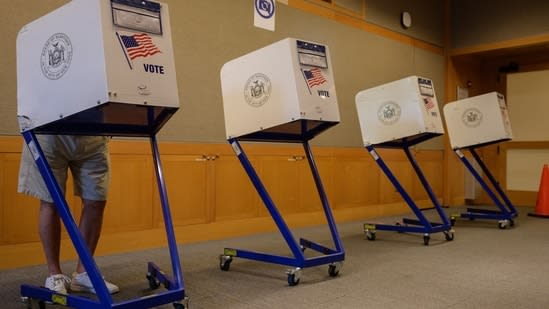
Donald Trump has alleged that China illicitly acquired 220 million US voter files to interfere in elections. However, intelligence officials and declassified documents indicate no evidence that any past election outcomes were actually altered.
Analysis of Allegations Regarding Chinese Election Interference
In a high-stakes primetime address, former US President Donald Trump has reignited a contentious national debate by alleging significant foreign interference in US democratic processes. The core of his claim centers on the assertion that the 2020 presidential election was "stolen," attributing this to a massive security breach orchestrated by China. By framing the event as a systemic failure of security, Trump has attempted to shift the narrative surrounding his 2020 loss toward a broader conversation about national security and foreign espionage.
The Scale of the Alleged Breach
Trump's allegations are specific and severe, claiming that China committed what he describes as "the largest compromise of election data in history." According to the claims, this operation resulted in the illicit acquisition of approximately 220 million US voter files. Beyond the theft of data, Trump pointed toward major vulnerabilities in US voting machines, suggesting that the technical infrastructure of American elections is susceptible to external manipulation. These claims are designed to suggest that the integrity of the vote was fundamentally compromised at a structural level.
Political Friction and Intelligence Disputes
An intriguing layer of this conflict is the allegation that critical intelligence was intentionally withheld from senior US officials, including Trump himself, for political motivations. This suggests a rift between the executive branch and the intelligence community. However, this narrative was immediately challenged by US Senator Mark Warner. Warner highlighted a significant logical contradiction in Trump's argument, noting that the very intelligence officials being criticized for withholding information were, in fact, appointed by Trump during his own first term in office. This tension underscores a deeper struggle over the reliability and neutrality of US intelligence agencies.
Fact-Checking via Declassified Material
Despite the gravity of the claims, a review of the declassified materials reveals a stark contrast between political rhetoric and intelligence findings. White House officials have clarified that the purpose of disclosing these documents is to highlight existing vulnerabilities to prepare for the upcoming November midterm elections, rather than to litigate the results of previous contests. Crucially, none of the declassified material supports the claim that any past US election—including the 2020 presidential race—was altered by fraud or foreign interference in a manner that changed the final outcome.
Long-standing Vulnerabilities vs. New Revelations
Further analysis provided by CNN suggests that the "revelations" presented in these documents are not necessarily new. Many of the security concerns described have been publicly known for years. Election officials have been actively working to address these specific vulnerabilities long before this recent political flare-up. This indicates that while the vulnerabilities may be real, they are being reframed as a "smoking gun" for past election interference rather than being treated as ongoing technical challenges that the state is already mitigating.
Conclusion and Future Implications
This episode illustrates the ongoing volatility of US political discourse regarding election integrity. While the technical reality involves a constant battle against foreign cyber threats and data breaches, the political application of these facts often diverges from the intelligence data. Moving forward, the focus will likely shift toward how the US secures voter data for the midterms, but the shadow of the 2020 "stolen election" narrative continues to persist, fueled by the tension between political leadership and the intelligence community.
Verification Required?