Trump Demands ABC & NBC Licenses Revoked After Networks Skip Election Integrity Speech
Source Entity
Latest News: Today's Latest News Headlines from India & World | Hindustan Times | Hindustan Times
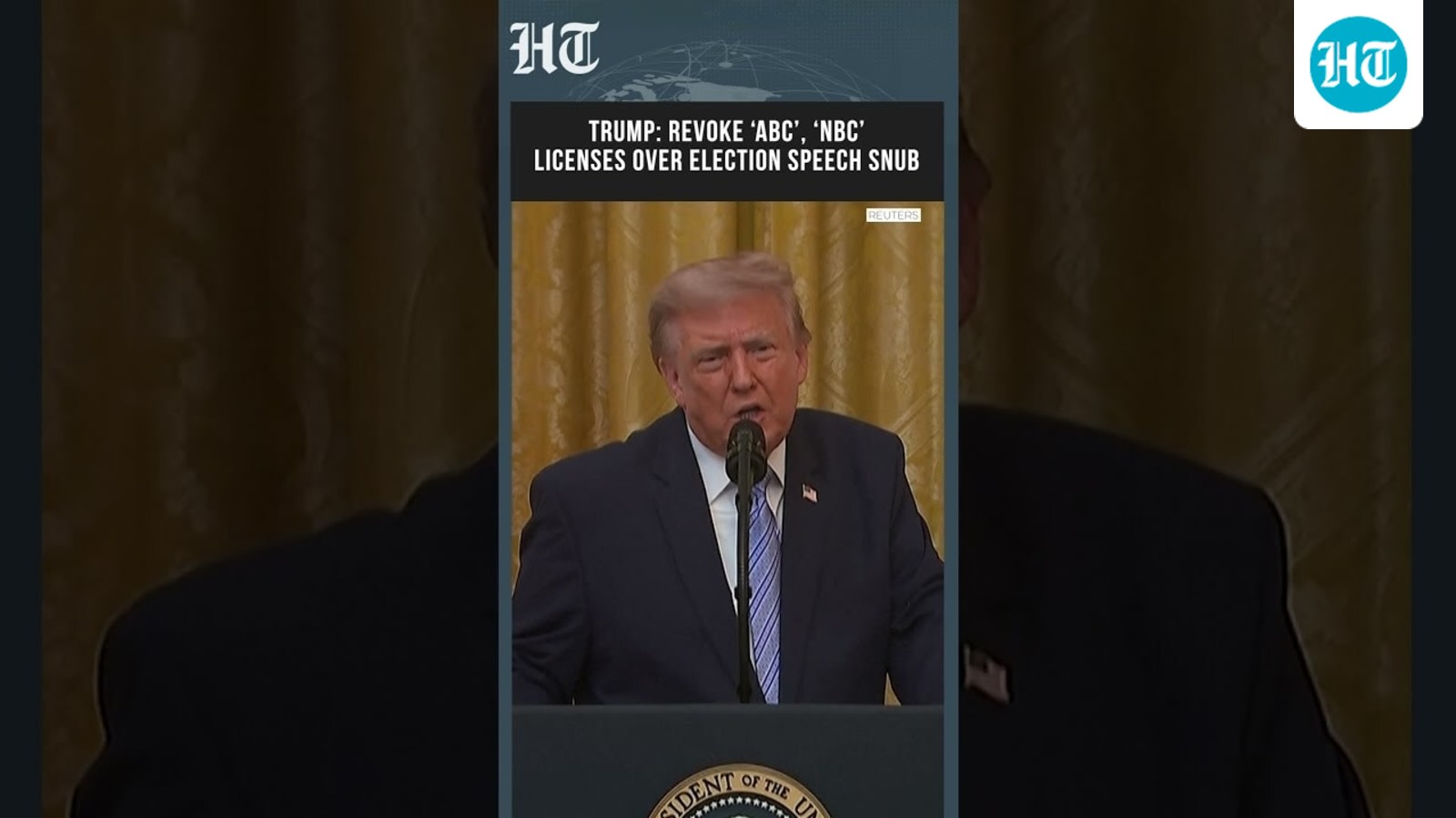
Donald Trump has called for the revocation of ABC and NBC's broadcasting licenses after the networks declined to air his speech on election integrity. Trump alleges political bias, sparking a renewed national debate over press freedom and media regulation.
Analysis of Trump's Demand for Broadcast License Revocation
In a significant escalation of his ongoing conflict with mainstream media, Donald Trump has demanded the revocation of broadcasting licenses for ABC and NBC. This demand stems from the networks' decision to skip airing his speech focused on election integrity, an action Trump characterizes as a clear manifestation of political bias. This event is not an isolated incident but rather a continuation of a long-standing narrative where the former president positions himself as a target of a biased media establishment, further polarizing the discourse surrounding journalistic neutrality in the United States.
The Catalyst: Election Integrity and Media Gatekeeping
The core of the dispute lies in the networks' refusal to broadcast a speech specifically centered on "election integrity." For Donald Trump, the decision by ABC and NBC to omit this content is viewed as an act of censorship and a deliberate attempt to suppress his political message. By framing the networks' editorial decisions as political bias, Trump is leveraging a narrative that resonates with a significant portion of the electorate who believe that mainstream media outlets act as ideological gatekeepers, deciding which political narratives are permissible for public consumption.
Regulatory Framework and the FCC
To understand the implications of demanding license revocations, one must look at the role of the Federal Communications Commission (FCC). In the U.S., broadcast licenses are granted to stations that serve the "public interest, convenience, and necessity." However, the FCC historically avoids interfering with the editorial content of news organizations due to First Amendment protections. Trump's demand challenges this regulatory norm, suggesting that political bias should be a criterion for license forfeiture. This proposal represents a fundamental shift in how media regulation could be perceived, potentially moving from a technical and public-service standard to a content-based standard.
The Press Freedom Debate
This incident has reignited a fierce national debate over press freedom and the First Amendment. Critics of Trump's demand argue that the ability of news organizations to choose which stories to cover and which speeches to air is a cornerstone of a free press. They contend that government-led efforts to revoke licenses based on editorial choices would create a "chilling effect," where networks fear reporting objectively or making editorial decisions that might anger the administration in power. Conversely, supporters of the demand argue that the media's perceived lack of objectivity necessitates a more stringent accountability mechanism to ensure fairness in election coverage.
Broader Implications for Election Coverage
The focus on "election integrity" adds a layer of complexity to this conflict. In the current political climate, the term is often a flashpoint for debates regarding the validity of election results. When major networks choose not to air speeches on this topic, it is interpreted by some as a refusal to engage with legitimate concerns and by others as a refusal to platform misinformation. This tension highlights the precarious position of news networks attempting to balance the need for political access with their responsibility to vet the factual accuracy of the content they broadcast.
Future Trends in Media-Political Relations
Looking forward, this event suggests a trend toward further fragmentation of the media landscape. As trust in mainstream outlets like ABC and NBC continues to be challenged by political leaders, there is a growing shift toward alternative media platforms where figures can broadcast directly to their audience without editorial oversight. This trend may lead to a more siloed information environment where citizens consume news that exclusively reinforces their existing biases, further eroding the possibility of a shared factual baseline for national political debate.
Conclusion
Donald Trump's call to revoke the licenses of ABC and NBC is a potent symbol of the deepening divide between the U.S. political leadership and the mainstream press. By tying the demand to a speech on election integrity, Trump has centered the conflict on the themes of bias and censorship. While the legal hurdles to revoking licenses based on editorial content are immense, the rhetorical impact of these demands continues to shape the public's perception of media reliability and the boundaries of press freedom in a democratic society.
Verification Required?