Did the Fed make a mistake with its October rate pause? The Treasury could help save the day.
Source Entity
Greg Robb
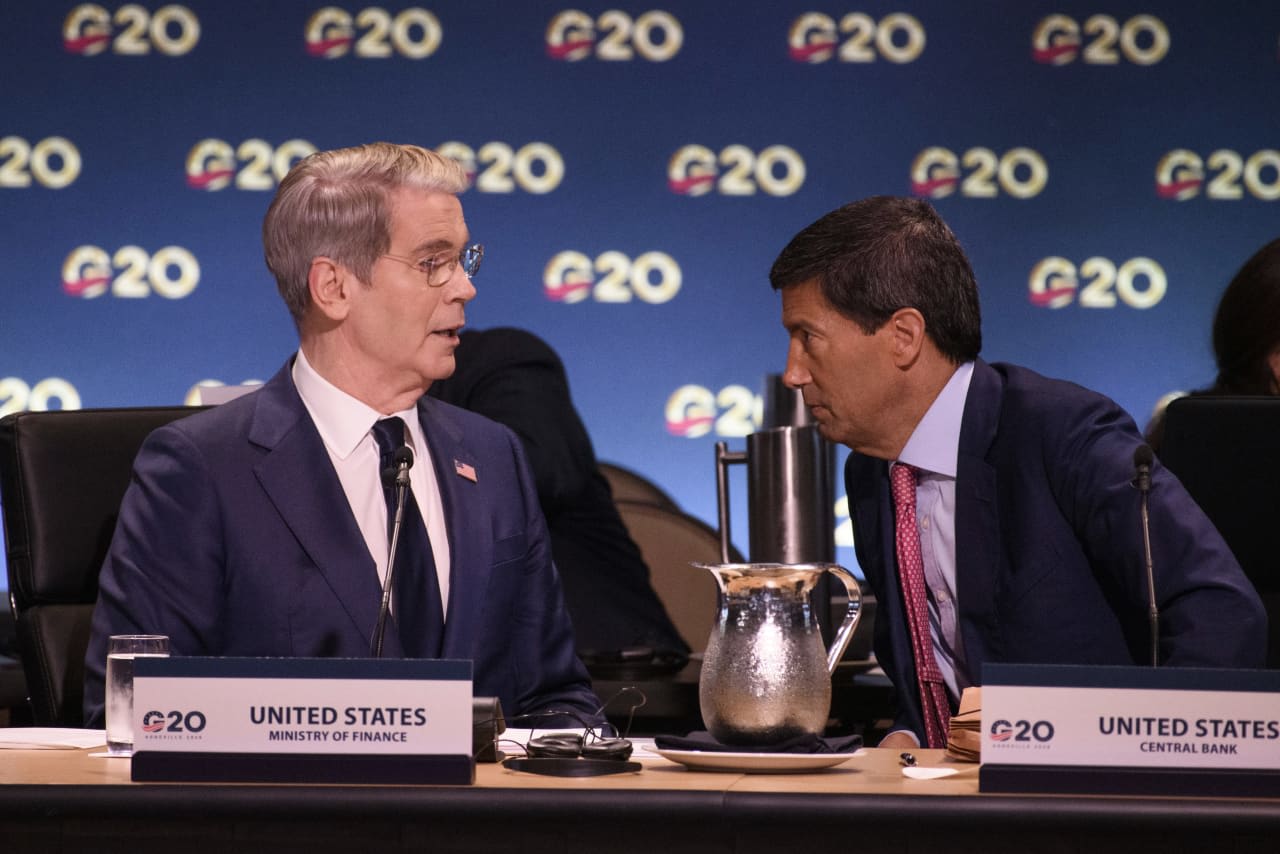
US Treasury yields declined following the Federal Reserve's decision to maintain current interest rates. Investors remain cautious as they evaluate rising September inflation data against potential future rate hikes in December.
Market Reaction to Federal Reserve Policy
Following the Federal Reserve's decision to maintain the current federal funds rate during its October meeting, financial markets experienced a notable shift in sentiment. US Treasury yields saw a broad decline across the curve, with the 10-year note dropping 5 basis points to 4.995% and the 2-year note following suit with a 5-basis-point decrease to 4.683%. This movement reflects the inverse relationship between bond prices and yields, where falling yields signify rising bond prices, indicating a momentary easing of selling pressure in the fixed-income market.
The Inflationary Backdrop
The market's cautious optimism is tempered by persistent inflationary pressures. The Personal Consumption Expenditures (PCE) Price Index, a key metric monitored by the Federal Reserve, rose to 3.6% in September, up from 3.4% in August. This figure remains significantly above the Fed’s established 2% target, driven largely by increased consumer spending on essential goods such as gasoline. The monthly increase of 0.5% in the PCE Index suggests that while price growth remains within the realm of economist expectations, the underlying trend is far from stabilizing at the central bank's desired level.
December Rate Hike Prospects
The persistence of inflation at 3.6% has fueled speculation regarding the Federal Reserve's next move. Investors are currently parsing the Fed's post-meeting commentary to determine if a rate hike is likely in December. The central bank faces a delicate balancing act: maintaining a restrictive policy stance to curb inflation without inadvertently triggering a deeper economic contraction. The market is essentially pricing in the possibility that the Fed may feel compelled to tighten conditions further if inflation metrics do not show a clear downward trajectory by year-end.
Treasury Funding and Market Demand
Beyond interest rate policy, the market is turning its attention toward the US Treasury’s upcoming funding strategies. There is growing anticipation that the Treasury might reduce the supply of longer-term debt instruments. By limiting the supply of these notes and bonds, the government hopes to stimulate demand, which would exert downward pressure on yields. This strategy serves as a potential mechanism to stabilize the bond market during a period of heightened volatility, effectively providing a secondary lever to influence financial conditions alongside the Fed's interest rate decisions.
Future Trends and Economic Implications
Looking ahead, the interplay between Treasury supply management and Fed policy will define the fiscal landscape for the final quarter of the year. If the Treasury successfully executes a reduction in long-term supply, it could provide a buffer against the upward pressure on yields usually associated with high-interest-rate environments. However, the ultimate trajectory of the economy remains tethered to the PCE data. Should inflation continue to print above the 2% target, the expectation of a December hike will likely intensify, keeping yields sensitive to every piece of incoming economic data. Investors must remain vigilant as the market navigates this transitionary period between aggressive monetary tightening and the potential for a long-term interest rate plateau.
Verification Required?