Virginia teen's model improves simulated earthquake sensor coverage by 16.7%
Source Entity
TOI SCIENCE DESK
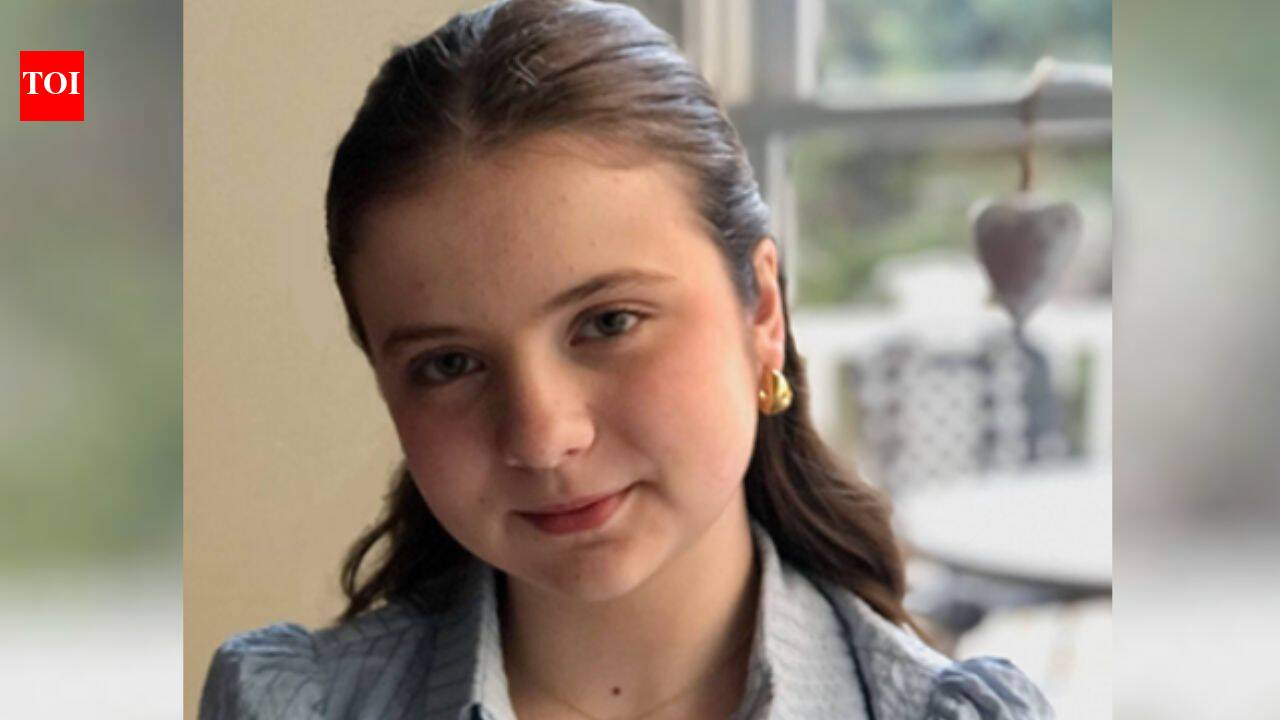
14-year-old student Isabel Rossi has been named a finalist in a national science competition for developing a mathematical model that optimizes earthquake sensor placement. Her research demonstrates that strategic positioning can increase detection coverage by 16.7%.
Advancing Seismic Safety Through Mathematical Innovation
In a remarkable display of academic rigor and scientific potential, 14-year-old Williamsburg, Virginia resident Isabel Rossi has been named a finalist in the 2026 Thermo Fisher Scientific Junior Innovators Challenge. Her research project, which spanned six months of dedicated study, addresses one of the most persistent challenges in geophysical monitoring: the optimal spatial distribution of seismic sensors.
The Challenge of Sensor Placement
Earthquake detection systems serve as the bedrock of modern public safety in seismically active regions. However, the efficacy of these systems is entirely dependent on the strategic placement of sensors. Scientists must constantly balance the need for high-resolution data collection with the practical limitations of hardware costs and infrastructure requirements. Rossi’s work highlights that current placement methodologies may be leaving gaps in coverage that could otherwise be mitigated through more precise mathematical modeling.
Methodology and Findings
Rossi utilized historical earthquake records from California—a region frequently subjected to significant seismic activity—to test her hypothesis. By applying sophisticated mathematical methods to analyze existing sensor networks, she developed a model that identifies more efficient installation points. Her findings are striking: by simply adding five sensors in accordance with her specific mathematical framework, simulated detection coverage increased by 16.7%. This represents a significant optimization that could theoretically lead to faster and more accurate early warning alerts.
The Intersection of Passion and Research
This project is not merely an isolated academic exercise but a reflection of Rossi’s deep-seated passion for mathematics. Often found working through complex equations and proofs in her personal time, her ability to translate abstract mathematical concepts into tangible solutions for disaster mitigation distinguishes her as a promising young scientist. Her success in reaching the top 30 finalists of a national competition underscores the importance of fostering STEM initiatives at the middle school level.
Broader Implications for Seismic Monitoring
While this research is currently a simulation, the implications for future seismic network design are profound. As urban centers continue to expand, the demand for robust, cost-effective early warning systems grows. If these mathematical models can be successfully scaled to real-world infrastructure, they could offer a low-cost, high-impact solution for municipalities looking to enhance their disaster preparedness without the prohibitive expense of massive sensor network expansions.
Conclusion: A Future in Geoscience
Isabel Rossi’s achievement serves as a reminder of how youth-led innovation can contribute to critical public safety sectors. By identifying a 16.7% improvement in coverage, she has provided a blueprint that researchers and disaster management agencies may eventually use to refine their own sensor deployments. Her journey from solving equations for fun to being recognized on a national stage highlights the vital role of analytical thinking in solving the world’s most pressing physical challenges.