A 2,500-year-old animal bone found in Sicily reveals how ancient people wrote on clay
Source Entity
TOI SCIENCE DESK
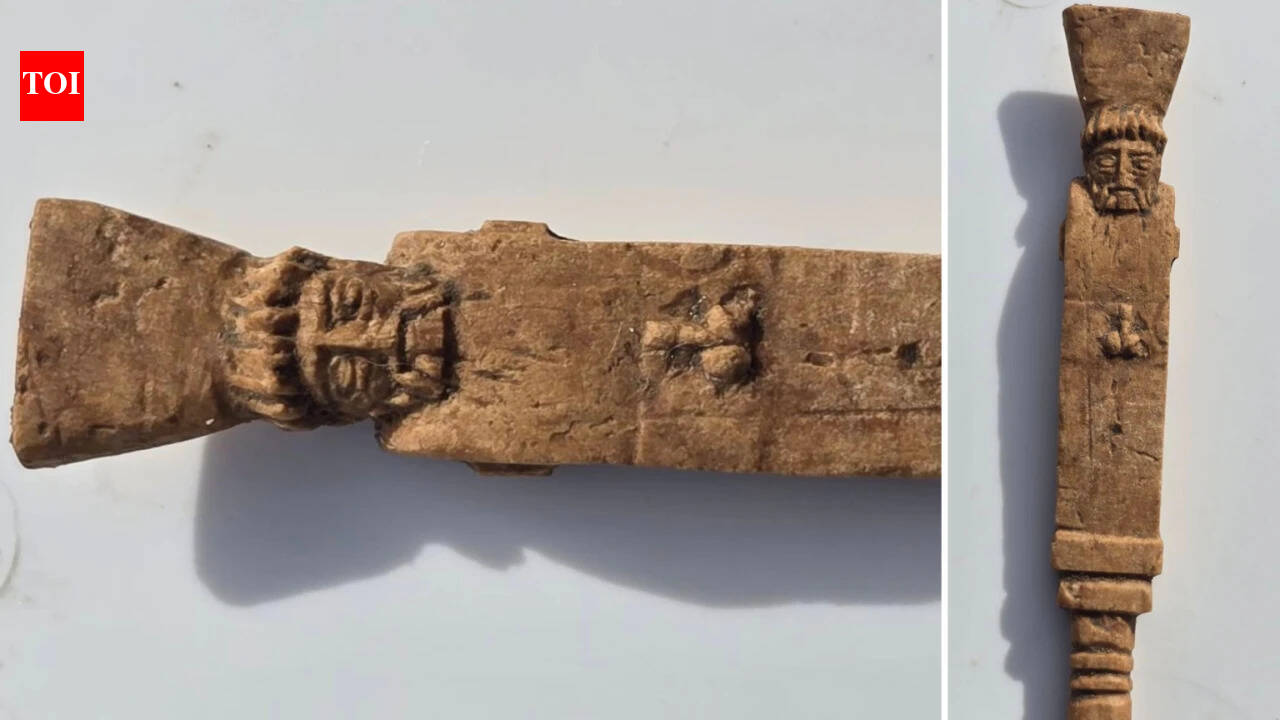
Archaeologists in Gela, Sicily, have discovered a rare 2,500-year-old bone stylus featuring imagery of Dionysus. This well-preserved artifact provides significant insights into ancient craftsmanship and the intersection of daily utility and religious devotion.
A Glimpse into Ancient Gela: The Dionysian Stylus Discovery
Archaeologists conducting preventive excavations in Gela, on the southern coast of Sicily, have unearthed a remarkable artifact from the 5th century BCE: a 13.2-centimeter bone stylus. Found at the Orto Fontanelle site during preparations for a new cultural center, this object is not merely a tool for writing on clay but a sophisticated piece of ancient artistry. Its preservation is exceptional, offering a rare window into the material culture of a period when Gela was a significant Greek colonial power.
The Intersection of Craft and Divinity
The most striking feature of the stylus is its intricate decoration, which experts believe depicts Dionysus, the Greek god of wine, ritual, and theater. By adorning a functional writing implement with the likeness of a deity, the artisan elevated a simple tool into a symbolic object. This connection suggests that in 5th-century BCE Gela, the act of writing was potentially viewed as a sacred or ritualized process, bridging the gap between administrative utility and spiritual expression.
Religious Significance and Offerings
Beyond its role as a writing instrument, researchers hypothesize that the stylus may have served as a religious offering. In the context of ancient Greek colonies, small, decorated objects were frequently dedicated to deities at sanctuaries or placed in significant locations to seek favor or express gratitude. The presence of Dionysian imagery strongly implies that the owner or the donor intended to imbue the act of writing with divine protection or inspiration, highlighting the deep integration of religion into the fabric of daily life.
Insights into Ancient Craftsmanship
The discovery provides tangible evidence of the high level of craftsmanship prevalent in Gela during the 5th century BCE. The ability to intricately carve bone—a material that requires precision and patience—demonstrates a specialized artisan class capable of producing refined goods for the local elite or for religious use. This stylus serves as a primary source for understanding the technological and artistic capabilities of the region, proving that even mundane tools were subjected to rigorous aesthetic standards.
Historical Context and Regional Importance
Gela was a powerhouse of the ancient Mediterranean, and finds like this stylus underscore the city's wealth and cultural complexity. During the 5th century BCE, Sicily was a melting pot of Greek, indigenous, and Punic influences, and the existence of such a high-quality stylus confirms that Gela remained a hub of Hellenic cultural practice. This artifact contributes significantly to our understanding of how ancient people interacted with their records and religious beliefs simultaneously.
Future Implications for Archaeology
As the excavation at Orto Fontanelle continues ahead of the construction of the new cultural center, this stylus sets a high precedent for the significance of the site. It serves as a reminder that preventive archaeology—excavations performed before modern development—is vital for preserving the historical record. This discovery will likely influence future studies on how writing implements were treated as cultural artifacts, potentially leading to a re-evaluation of similar items held in museum collections globally.