Mast broke, phone died, water ran out. Ship found him after 30 days
Source Entity
TOI WORLD DESK
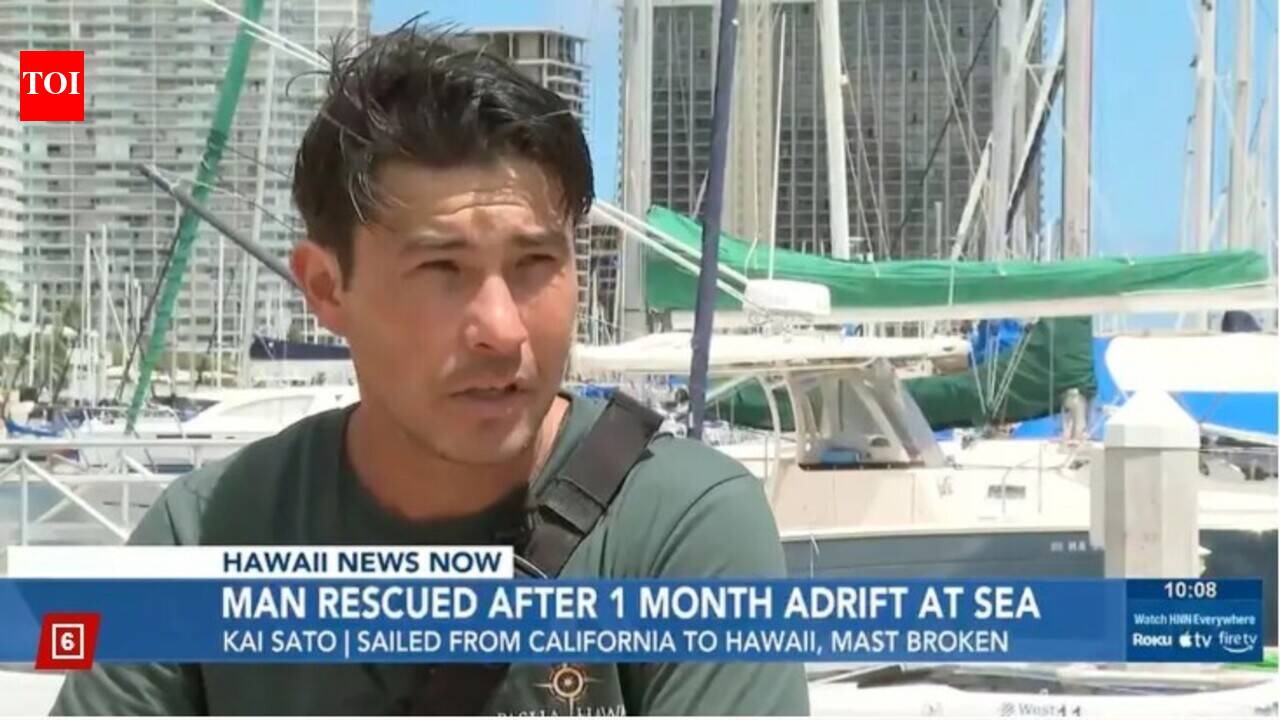
California sailor Kai Sato was rescued by a container ship after surviving 30 days adrift in the Pacific Ocean. After his mast failed and his communication devices died, Sato managed to survive by improvising repairs and collecting condensation for water.
A Perilous Pacific Odyssey: The Survival of Kai Sato
The Incident at Sea
The recent rescue of 39-year-old Kai Sato serves as a harrowing reminder of the inherent dangers of solo maritime travel. Sato, who departed Catalina Island on June 7, intended to complete his first solo crossing of the Pacific. However, the voyage quickly turned into a fight for survival when his sailboat suffered a catastrophic failure, losing its mast and leaving him stranded approximately 900 miles from Hawaii. With his communication devices dead and fuel exhausted, Sato was left to the mercy of the open ocean.
Survival Under Extreme Conditions
Stranded for 30 days, Sato’s ability to remain alive is a testament to human ingenuity and resilience. Without reliable navigation or signaling equipment, he was forced to rely on rudimentary survival techniques. Reports indicate that he managed to survive by improvising repairs to his vessel and meticulously collecting condensation to maintain hydration. These efforts, combined with rationing limited food supplies, allowed him to endure the harsh conditions of the Pacific until his eventual discovery.
The Role of Maritime Cooperation
The rescue operation, which lasted approximately 90 minutes, highlights the critical importance of the international maritime community. Sato was discovered by the crew of a passing container ship, an event that underscores the effectiveness of global shipping lanes as a lifeline for mariners in distress. The success of this operation was not just a matter of chance; it reflects the vigilant watch-keeping protocols maintained by commercial vessels operating in open waters.
Broader Implications for Solo Voyagers
This incident raises significant questions regarding safety standards and preparation for solo long-distance sailors. While the allure of the open ocean is powerful, the reliance on single points of failure—such as a mast or a mobile phone—can prove fatal. Experts often emphasize the necessity of redundant communication systems, such as satellite emergency position-indicating radio beacons (EPIRBs), which are designed to alert rescue services even when primary systems fail.
The Aftermath and Future Trends
Following his rescue, Sato expressed profound gratitude to the crew who saved his life. As he recovers from this ordeal, the maritime community will likely analyze the details of his 30-day journey to better understand how such incidents can be mitigated in the future. The event serves as a stark lesson for the sailing community about the unpredictability of the Pacific and the extreme physical and mental toll of solo endurance in the face of equipment failure.
Conclusion
The survival of Kai Sato is a miraculous conclusion to a journey that nearly ended in tragedy. His experience underscores both the danger of the Pacific and the vital importance of maritime safety protocols. As he begins his recovery, the story stands as a compelling case study on the limits of human endurance and the necessity of preparedness for those who seek to navigate the world's most remote waters.