Traffic snarls, water enters shops: Heavy rain sinks parts of Delhi
Source Entity
Mishal Mussaddique
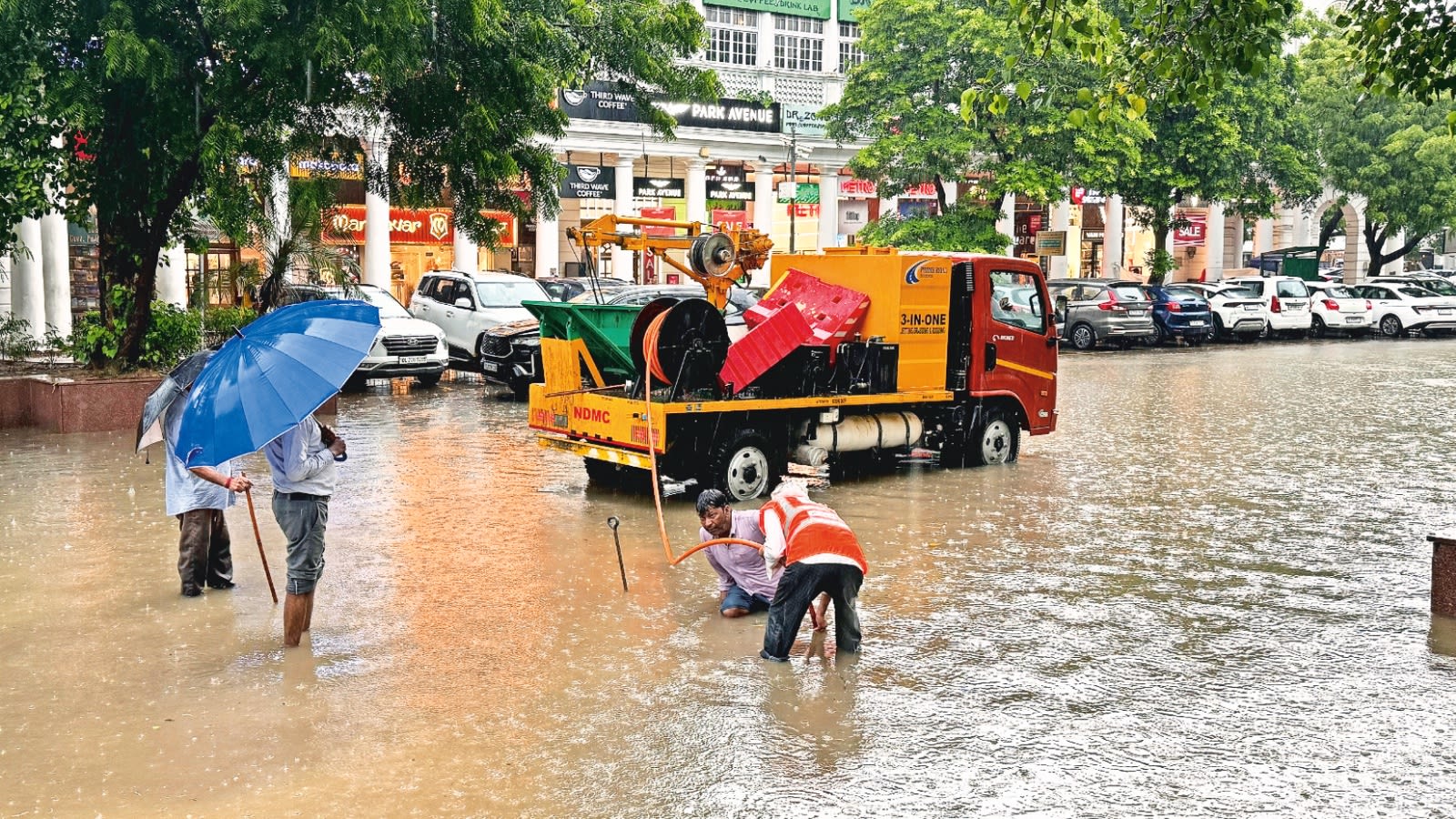
Delhi and surrounding regions experienced heavy rainfall on Tuesday, leading to significant waterlogging and traffic disruptions. The city has already surpassed its normal monthly rainfall for July, prompting an orange alert from the IMD.
Delhi-NCR Reels Under Intense Monsoon Deluge
The National Capital Region (NCR) faced a severe weather event this Tuesday as heavy monsoon rains lashed Delhi, Noida, and surrounding areas. The Indian Meteorological Department (IMD) responded to the intensity of the downpour by issuing an 'orange alert,' signaling a high degree of preparedness required for severe weather conditions. This precipitation event, characterized by cloudy skies and gusty winds, has caused widespread disruption to the urban infrastructure of the capital.
Impact on Infrastructure and Commerce
The rainfall led to significant waterlogging across critical arterial routes, causing traffic to come to a virtual standstill for several hours. The impact was particularly visible in major commercial hubs, including Connaught Place and Janpath Market. The New Delhi Traders Association reported that flooding in the G Block, A Block, and Outer Circle areas severely hampered commercial activity, with water entering shops and forcing businesses to contend with the immediate aftermath of the deluge. Similar conditions were observed in Sadar Bazar, illustrating the vulnerability of Delhi's commercial districts to extreme weather.
Statistical Breakdown of the Rainfall
Data from the IMD’s various observatories provides a clear picture of the storm's distribution. Safdarjung, the city’s base weather station, recorded 32.4 mm by 8:30 am, with an additional 57.6 mm recorded between 8:30 am and 5:30 pm. Other areas saw even higher accumulation; Lodhi Road reported 68.8 mm, and the Ridge recorded 40.6 mm. This significant volume of water within a short temporal window overwhelmed local drainage systems, resulting in the knee-deep water levels encountered by commuters and students.
Regional Context: Beyond Delhi
The weather pattern was not isolated to Delhi. Neighboring cities, including Gurgaon and Noida, faced comparable challenges, with urban mobility severely restricted. Furthermore, Chandigarh, serving as the joint capital of Punjab and Haryana, also experienced heavy rainfall, leading to flooded roads and stranded vehicles. The widespread nature of these rains highlights the regional scale of the current monsoon surge affecting Northern India.
Surpassing Monthly Norms
Perhaps the most significant long-term implication of this event is the shift in Delhi's seasonal statistics. The cumulative rainfall for July has now reached approximately 226 mm, comfortably exceeding the monthly 'normal' of 192.6 mm. This suggests that the region is experiencing a more aggressive monsoon season than historical averages would predict. As the IMD continues to upgrade its warnings, the reliance on accurate forecasting and robust urban planning becomes increasingly critical for the city's resilience against future climate variability.
Concluding Summary
In summary, the recent heavy rainfall has highlighted significant gaps in the drainage and infrastructure capabilities of the Delhi-NCR region. While the monsoon is a vital component of the regional ecology, the intensity of these short-duration, high-volume events continues to cause major disruptions to daily life, commerce, and transit. As July rainfall totals already surpass historical norms, authorities and residents must prepare for the possibility of continued volatility throughout the remainder of the monsoon season.
Multiple Citing Sources