China hits out at British Steel nationalisation
Source Entity
BBC News
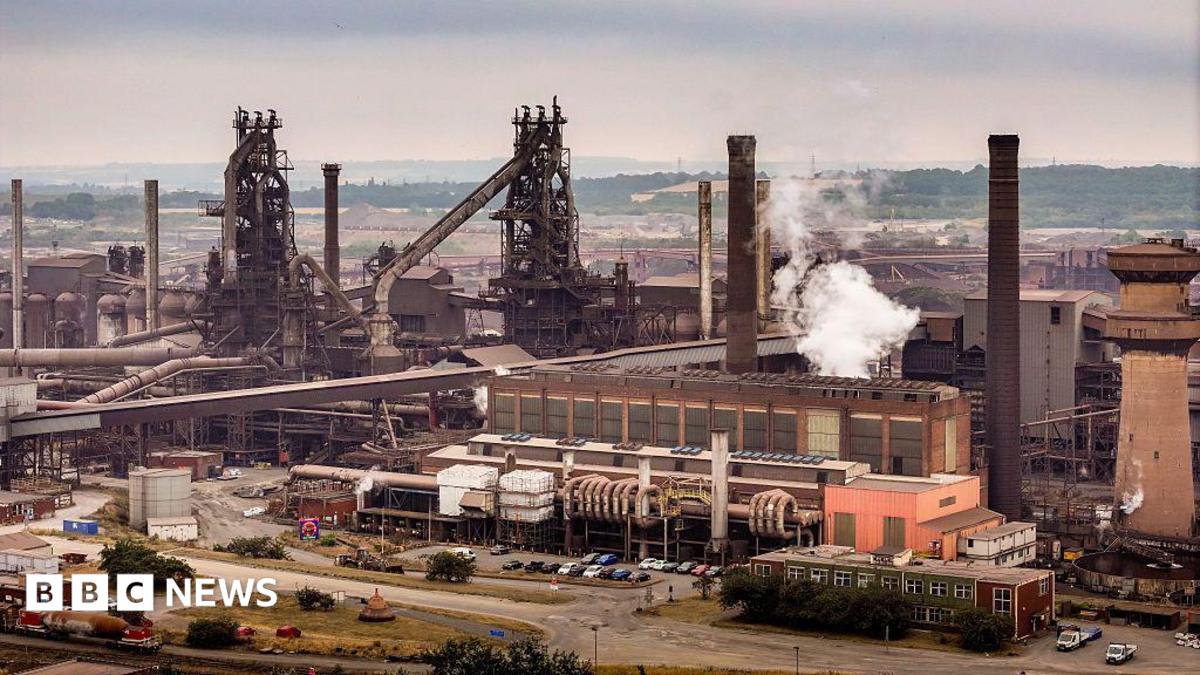
China has strongly condemned the UK government's decision to nationalize British Steel's operations in Scunthorpe. Beijing claims the move violates the rights of the Jingye Group and undermines foreign investor confidence.
Diplomatic Friction Over British Steel Nationalisation
The diplomatic relationship between London and Beijing has entered a period of heightened tension following the United Kingdom's decision to nationalize the operations of British Steel in Scunthorpe. China's commerce ministry has expressed strong dissatisfaction, characterizing the move as a forced takeover under the guise of national security. This conflict highlights the precarious balance between a nation's desire to protect its critical infrastructure and its commitment to maintaining an open, attractive environment for foreign direct investment.
The UK's Strategic Rationale
From the perspective of the British government, the intervention was framed as a necessity to safeguard a "vital national capability." By taking a loss-making entity into public hands, the UK aims to prevent the total collapse of steel production in Scunthorpe, thereby protecting thousands of jobs and ensuring that the country retains the industrial capacity to produce steel domestically. The government's decision suggests a shift toward a more interventionist economic policy, where the state prioritizes industrial sovereignty over the autonomy of foreign owners, especially when those owners are perceived as unable or unwilling to steer the company toward long-term sustainability.
China's Response and the Jingye Group
Beijing's reaction focuses heavily on the Jingye Group, the Chinese entity that owned British Steel. The Chinese commerce ministry argues that the UK has disregarded Jingye's "significant contribution" to the British economy and society. By labeling the move as an infringement on "legitimate rights and interests," China is signaling that it views this nationalization not as a pragmatic economic rescue, but as a targeted political act. This rhetoric serves as a warning to other Chinese firms operating in the UK, suggesting that their assets may be vulnerable regardless of their economic contributions if geopolitical winds shift.
Legal Obligations and Investment Confidence
Central to this dispute is the China–UK Bilateral Investment Treaty. Beijing has explicitly called on Britain to "faithfully fulfil" its obligations under this agreement, implying that the nationalization may constitute a breach of international law or treaty terms. The statement that China will "support Chinese firms to protect their rights" is particularly ambiguous; it could range from pursuing legal arbitration in international courts to implementing reciprocal economic measures against British firms operating within China, thereby escalating a corporate dispute into a broader trade war.
Political Timing and the Burnham Administration
The timing of this crisis is critical, as it coincides with a major leadership transition in the UK. With Andy Burnham set to become Prime Minister, this dispute provides a volatile backdrop for his first days in office. The new administration will be forced to navigate a complex dilemma: maintaining the firm stance on national security and job protection that the public expects, while attempting to stabilize relations with one of the world's largest economies to avoid damaging trade repercussions.
Broader Implications for Global Investment
This event reflects a growing global trend where "national security" is increasingly used as a legal mechanism to justify the seizure or restriction of foreign-owned critical assets. As the West seeks to "de-risk" its supply chains from Chinese influence, the risk of asset nationalization becomes a tangible threat. This shift likely undermines the confidence of Chinese investors in the UK, potentially leading to a decrease in capital inflows from East Asia as firms fear that their investments can be revoked by the state during periods of diplomatic cooling.
Conclusion
In summary, the nationalization of British Steel's Scunthorpe operations is more than a domestic industrial rescue; it is a geopolitical flashpoint. While the UK prioritizes the protection of jobs and strategic capabilities, China views the move as a violation of property rights and investment treaties. As Andy Burnham takes office, the resolution of this conflict will serve as a bellwether for the future of UK-China economic relations and the broader stability of foreign investment in critical infrastructure.