US launches fresh wave of strikes as Iran says civilian infrastructure hit
Source Entity
BBC News
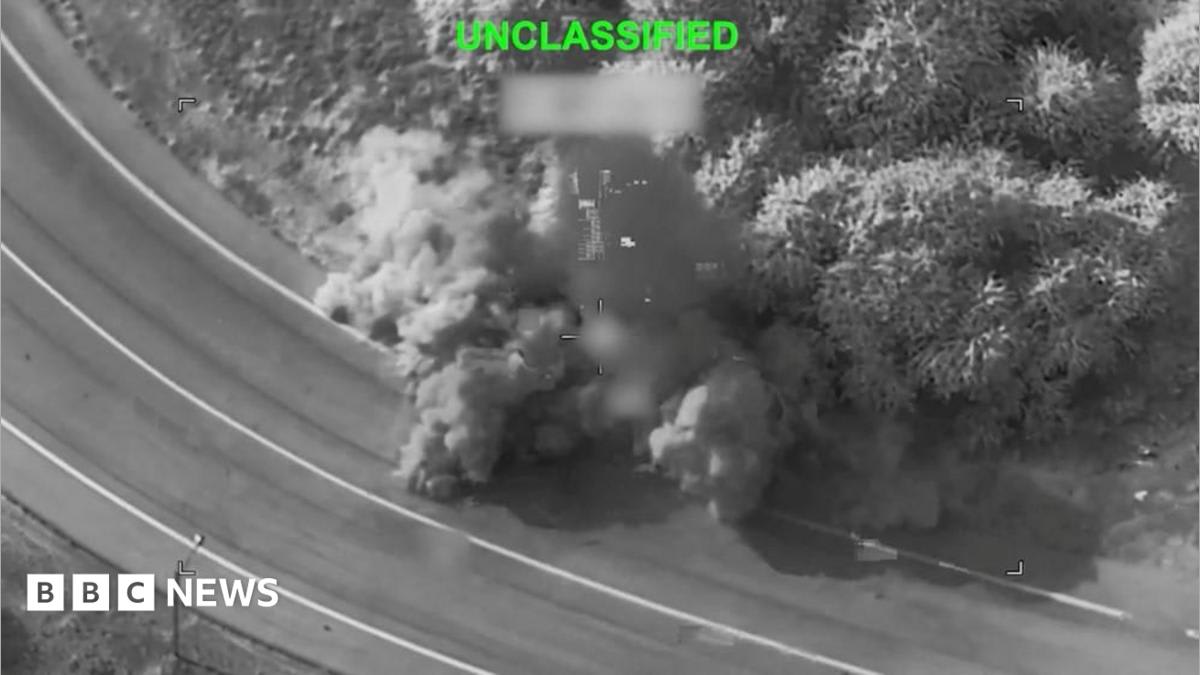
The US has conducted six consecutive nights of strikes against Iran to degrade military capabilities and secure the Strait of Hormuz. Iran reports attacks on civilian infrastructure, leading the UN to warn that such actions may constitute war crimes.
Escalation in the Strait of Hormuz: US-Iran Military Confrontation
The geopolitical tension between the United States and Iran has reached a critical flashpoint as the US military executes a sustained campaign of airstrikes and naval operations. For six consecutive nights, US forces have launched waves of attacks aimed at Iranian assets, specifically focusing on the strategically vital Strait of Hormuz. This region serves as a global chokepoint for oil transit, and the current battle for control indicates a high-stakes effort by the US to ensure maritime security and project power in the Persian Gulf.
Strategic Objectives and Military Tactics
According to US Central Command (Centcom), the primary objective of these operations is to "further degrade Iranian military capabilities." The strategy involves a multi-domain approach, utilizing jets, drones, and ships to target coastal surveillance, air defense sites, and military logistics infrastructure. Beyond the airstrikes, the US has implemented a naval blockade of the strait, which included the boarding of a vessel. This combination of kinetic strikes and maritime interdiction is designed to neutralize Iran's ability to disrupt international shipping and limit its operational reach in the region.
The Controversy of Civilian Infrastructure Targets
While the US maintains that its targets are military in nature, Iranian state media reports a different narrative, claiming that the strikes have hit critical civilian infrastructure. These reported targets include bridges, a train station, and an airport. The gravity of these claims is underscored by the BBC, which has independently verified an attack on a bridge located to the west of Bandar Abbas in the Hormozgan province. The targeting of such facilities suggests a shift toward a strategy of systemic pressure, potentially aimed at crippling the domestic logistics and transport networks of the Iranian state.
Legal Implications and Humanitarian Warnings
The potential targeting of non-military sites has drawn sharp condemnation from the international community. UN human rights chief Volker Türk has explicitly warned that "deliberately attacking civilians and civilian infrastructure is a war crime." This warning comes in the wake of statements from US President Donald Trump, who had previously threatened to strike Iranian bridges and power plants as a means to force the country back to the negotiating table. The tension between military necessity and international humanitarian law is now at the forefront of this conflict, as the definition of "military logistics" overlaps with civilian usage.
Analysis of Key Strike Zones
The geographic distribution of the strikes reveals a calculated focus on Iran's southern coastal defenses. Missiles have struck areas close to Qeshm island and within Bandar Abbas, a critical port city. Most notably, strikes were reported in Bushehr, the site of a nuclear power plant. The proximity of strikes to nuclear and energy infrastructure significantly raises the risk of an environmental or radiological catastrophe, adding a layer of existential danger to the military engagement and increasing the volatility of the confrontation.
Conclusion: A Cycle of Escalation
This wave of strikes represents a dangerous escalation in the US-Iran rivalry, transitioning from diplomatic threats to active, sustained combat operations. By targeting infrastructure and implementing a blockade, the US is employing a maximum-pressure campaign to compel Iranian diplomatic concessions. However, the reported damage to civilian sites and the strategic targeting of energy hubs like Bushehr suggest a conflict that could easily spiral beyond a localized military operation into a broader regional war with severe humanitarian consequences.