EEG shows brain can simultaneous encode two speech streams
Source Entity
Hacker News
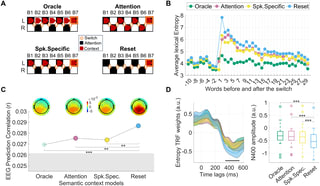
A new EEG study demonstrates that the human brain can simultaneously encode two competing speech streams in multi-talker environments. The research highlights the critical role of rapid attention switching and asymmetric neural processes in auditory communication.
Decoding the Auditory Brain: Simultaneous Encoding of Speech Streams
Successful communication in complex, multi-talker environments—often referred to as the 'cocktail party' scenario—is a sophisticated cognitive feat. It requires the brain to not only maintain focus on a single speaker but to dynamically shift that focus as the social environment changes. Recent research utilizing Electroencephalography (EEG) has provided groundbreaking insights into how the brain manages this process, revealing that the neural architecture is capable of encoding multiple speech streams simultaneously, even while the listener is consciously attending to only one.
The Gap Between Sustained Attention and Rapid Switching
For years, neurophysiology has provided a wealth of data regarding sustained attention—the ability to lock onto a specific stimulus over a period of time. However, the mechanisms behind attention switching—the rapid transition from one auditory target to another—have remained largely opaque. This study addresses this critical gap by analyzing how normal-hearing adults navigate immersive environments filled with competing speech and background babble. The findings suggest that the ability to communicate effectively in loud settings is not just about filtering noise, but about a skillful combination of sustained focus and the agility to switch attention rapidly.
Methodology: Immersive EEG and Neural Tracking
To capture these fleeting neural transitions, researchers employed EEG recordings in a controlled, immersive multi-talker setting. Participants were tasked with switching their attention between two distinct speech streams every 15 to 30 seconds, guided by specific cues. To decode the brain's activity, the study utilized Temporal Response Functions (TRF). TRFs allow researchers to map how the brain's electrical activity tracks the temporal envelope of the speech being heard, providing a mathematical fingerprint of which speech stream the participant is focusing on at any given millisecond.
The Discovery of Simultaneous Encoding
One of the most significant revelations of this study is that the brain does not simply 'mute' the non-attended stream. Instead, the EEG data indicates that the brain can simultaneously encode two competing speech streams. While the 'attended' stream is processed more robustly, the 'unattended' stream still leaves a neural trace. This suggests that the brain maintains a level of monitoring for secondary streams, which likely facilitates the rapid switching process by keeping the alternative stream 'primed' for engagement.
Asymmetric Processes of Engagement and Disengagement
Further analysis of the TRF data revealed that the process of switching attention is not symmetrical. There is a distinct difference between the neural signatures of disengaging from one speaker and engaging with another. This asymmetry suggests that letting go of a current attentional focus may involve different cognitive mechanisms than the active acquisition of a new one. This nuance is vital for understanding the cognitive load associated with multi-talker environments and how the brain prioritizes information during rapid transitions.
Future Implications for Auditory Science
These findings have profound implications for the development of assistive hearing technologies. By understanding the neural markers of attention switching and the asymmetric nature of engagement, engineers may be able to design 'smart' hearing aids that can predict and support a user's attentional shifts in real-time. Furthermore, this research paves the way for deeper explorations into how cognitive impairments or hearing loss affect the brain's ability to switch attention, potentially leading to new therapeutic interventions for auditory processing disorders.
Summary
In conclusion, this study underscores the complexity of the human auditory system, proving that the brain is capable of simultaneous neural encoding of multiple speech streams. By utilizing TRF and EEG, researchers have illuminated the asymmetric nature of attention switching, bridging a significant gap in neurophysiological knowledge and offering a foundation for future advancements in both cognitive science and auditory technology.