Who is Anil Menon? All about the Indian-origin NASA astronaut aboard the ISS
Source Entity
Latest News: Today's Latest News Headlines from India & World | Hindustan Times | Hindustan Times
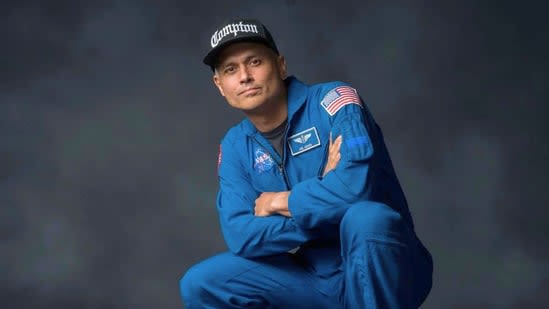
Indian-origin NASA astronaut Anil Menon has arrived at the International Space Station aboard the Soyuz MS 29 spacecraft. He will spend approximately eight months conducting scientific research, technology demonstrations, and maintenance work.
A New Milestone in Space Exploration: The Journey of Anil Menon
The arrival of Anil Menon at the International Space Station (ISS) marks a significant moment for both NASA and the global Indian diaspora. Traveling aboard the Russian Soyuz MS 29 spacecraft, Menon has embarked on his first space mission, a journey that has captured widespread attention due to his unique background and the critical nature of his assignment. This mission represents the ongoing international collaboration that defines the ISS, utilizing Russian transport systems to place American personnel into orbit for long-term scientific endeavors.
The Intersection of Medicine and Military Expertise
Anil Menon is not a traditional astronaut; he brings a highly specialized dual-competency to the orbiting laboratory. As an emergency medicine physician and a Lieutenant Colonel in the United States Space Force, Menon embodies the multidisciplinary approach required for modern spaceflight. The integration of emergency medical expertise is vital for long-duration missions where immediate access to terrestrial healthcare is impossible. His military rank further underscores the strategic coordination between the US Space Force and NASA, highlighting how national security and scientific exploration often overlap in the management of orbital assets.
Mission Objectives and Technical Scope
During his anticipated eight-month stay aboard the ISS, Menon is tasked with a rigorous schedule of scientific research, technology demonstrations, and essential maintenance. These activities are not merely routine; they are pivotal for testing the limits of human endurance and the reliability of new hardware. Technology demonstrations on the ISS often serve as the primary testing ground for systems that will eventually be used in deep-space missions, such as the Artemis program's return to the Moon or future crewed missions to Mars. The maintenance aspect of his role ensures that the aging infrastructure of the ISS remains viable for a global cohort of researchers.
Cultural Heritage and Global Representation
Menon's personal history adds a layer of profound cultural significance to the mission. Born and raised in the United States with a father from India and a mother from Ukraine, he represents a synthesis of diverse global heritages. In an era where space exploration is increasingly viewed as a collaborative human effort rather than a nationalist race, Menon's Indian and Ukrainian roots serve as a living symbol of the internationalism inherent in the ISS program. His journey resonates particularly strongly in India, inspiring a new generation of aspiring scientists and engineers in a country with a rapidly growing space sector.
Broader Implications for Future Spaceflight
The presence of a physician-astronaut like Menon signals a shift toward prioritizing health and wellness autonomy in space. As NASA looks toward the 'Lunar Gateway' and beyond, the ability to manage complex medical emergencies in microgravity will be a prerequisite for survival. Menon's work on the ISS will likely contribute to the development of protocols for autonomous medical care, reducing the reliance on ground-based guidance. This trend toward specialized medical training for astronauts is a critical stepping stone for any permanent human presence beyond Low Earth Orbit (LEO).
Conclusion: A Legacy of Collaboration
In summary, Anil Menon's mission is more than a personal achievement; it is a testament to the synergy of international diplomacy, advanced medicine, and military precision. By spending eight months aboard the ISS, he is contributing to a body of knowledge that will benefit all of humanity. His journey from a US-raised individual of mixed heritage to a NASA astronaut aboard a Russian spacecraft encapsulates the spirit of global cooperation necessary to unlock the mysteries of the cosmos.
Verification Required?