6,000 penguin dives reveal how sea ice can make prey harder to reach
Source Entity
TOI SCIENCE DESK
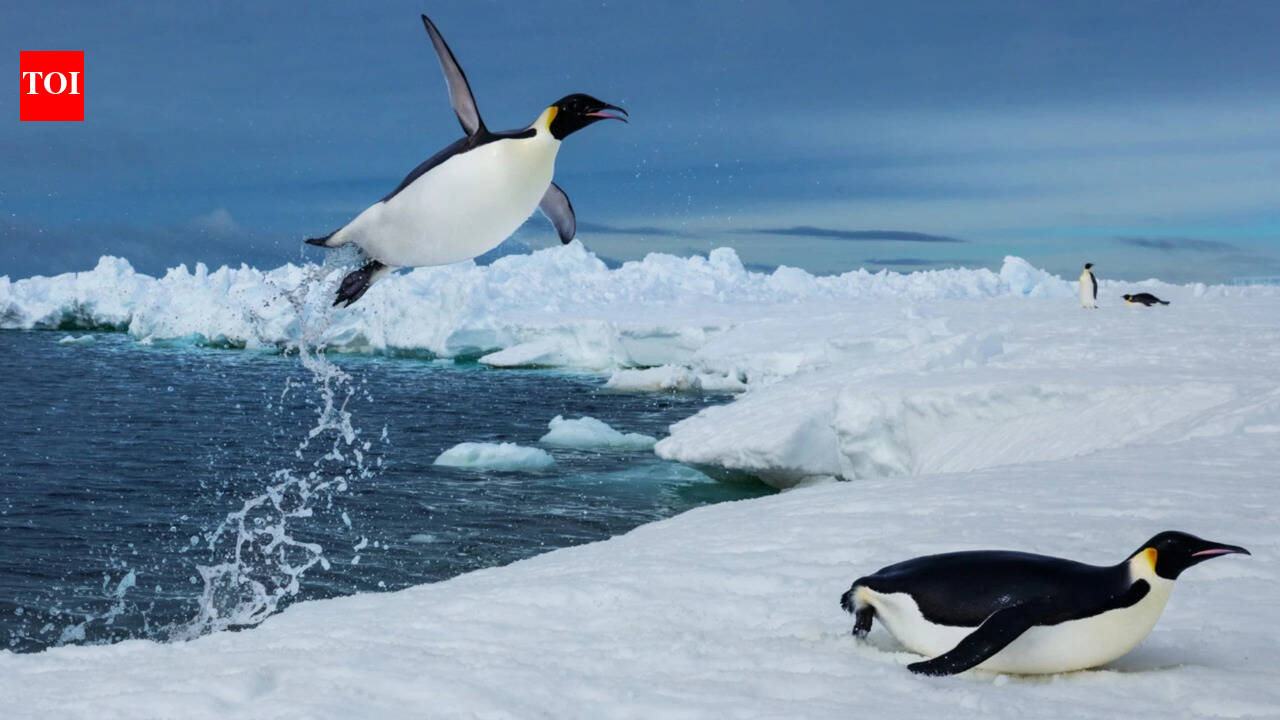
Scientists tracking 6,000 penguin dives discovered that sea ice significantly limits prey accessibility, even when food abundance remains stable. The study reveals that restricted access points force penguins to dive deeper and farther to find food.
The Hidden Struggle: Prey Accessibility in the Antarctic
In the harsh environment of the Antarctic, the survival of nesting penguins depends on more than just the presence of food. Recent scientific research, involving the tracking of over 6,000 penguin dives, has uncovered a critical nuance in predator-prey dynamics: the distinction between prey abundance and prey accessibility. While it is often assumed that a high biomass of krill or fish ensures a stable food supply, this study demonstrates that physical barriers—specifically thick sea ice—can make these resources nearly unreachable, regardless of how many animals are actually in the water.
The Bottleneck Effect of Sea Ice
One of the most striking findings of the research is the impact of the physical environment on foraging efficiency. The study observed that when a colony's surrounding bay is covered by thick sea ice, penguins are unable to dive freely across the ocean. Instead, they are forced to enter and leave the water through a small number of shared holes in the ice. This creates a spatial bottleneck that fundamentally alters how the penguins hunt. Because multiple penguins are utilizing the same limited access points, the immediate vicinity of these holes becomes depleted or the prey learns to avoid these high-traffic zones.
Diving Deeper: The Cost of Foraging
As a result of these shared access points, the data indicates a progressive increase in the effort required to feed. Researchers found that penguins had to dive progressively deeper and farther from the ice holes to encounter their prey. Interestingly, the study noted that once the penguins actually encountered the prey, their feeding rates remained unchanged. This suggests that the struggle is not in the act of eating, but in the act of finding. The energy expenditure required to reach the prey increases over time, which could have significant implications for the overall health and caloric balance of the penguins during the nesting season.
Prey Adaptation and Behavioral Shifts
The difficulty in catching prey is not solely due to the ice, but also to the adaptive behaviors of the prey themselves. The research highlights that prey animals often change their distribution or behavior in response to predator pressure. For instance, during daylight hours, prey tend to stay in deeper waters to avoid predators that hunt by sight. This behavioral shift creates a "mystery of empty zones" near the surface, forcing penguins to extend their dives into deeper, colder waters. This interaction between the predator's limited access and the prey's avoidance strategies creates a complex tactical game of hide-and-seek beneath the ice.
Broader Ecological Implications
This discovery shifts the scientific understanding of Antarctic ecology by emphasizing that "biomass" is a misleading metric if it does not account for accessibility. From a broader perspective, this suggests that environmental changes—such as shifts in sea ice thickness or distribution—could lead to penguin population declines even if the total amount of krill in the ocean remains constant. If the ice patterns change in a way that further restricts access to the water or pushes prey into deeper refuges, the energetic cost of foraging may eventually exceed the nutritional gain.
Conclusion: A New Lens on Marine Conservation
In summary, the tracking of 6,000 dives provides a vivid illustration of how the physical architecture of the Antarctic sea ice shapes the lives of its inhabitants. By proving that accessibility is as vital as abundance, this research underscores the fragility of the penguin's food chain. Future conservation efforts and climate models must now consider not only the population numbers of krill and fish but also the physical barriers and behavioral adaptations that determine whether a penguin can actually reach its next meal. The ability to navigate these "empty zones" will likely determine the long-term resilience of Antarctic penguin colonies in a changing climate.