Salman Rushdie attacker convicted of terror offenses
Source Entity
BBC News
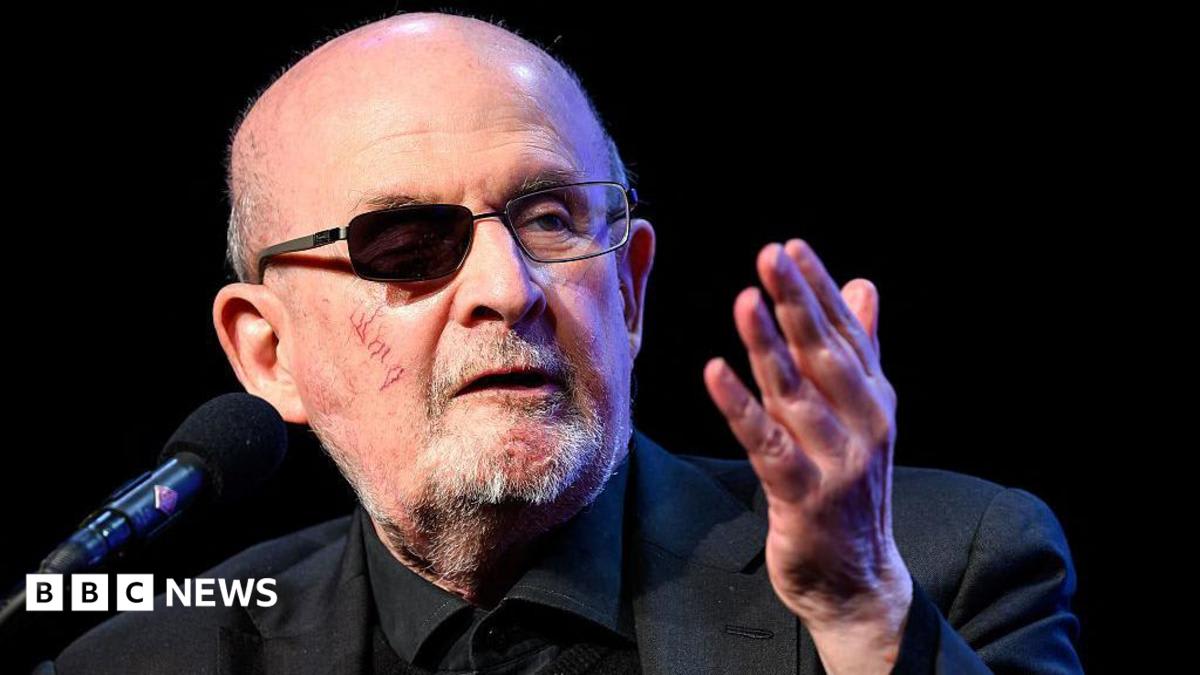
Hadi Matar has been convicted in a US federal court of providing material support to Hezbollah in his 2022 attack on author Salman Rushdie. This federal verdict adds to his existing state prison sentence for the stabbing, which was motivated by a 1989 fatwa.
The Legal Reckoning of the Salman Rushdie Attack
A New York federal jury has reached a significant verdict, convicting Hadi Matar, 28, of providing material support to the Lebanese militant group Hezbollah. This legal development follows Matar’s previous conviction for the 2022 stabbing of Sir Salman Rushdie, an attack that left the acclaimed author severely injured. While Matar was already serving a 25-year state prison sentence for attempted murder, these new federal charges underscore the transnational dimension of the violence, framing the assault not merely as an isolated criminal act, but as an extension of international terrorism.
Historical Context: The 1989 Fatwa
To understand the gravity of this case, one must look back to 1989, when Iran’s then-supreme leader issued a fatwa calling for the death of Salman Rushdie following the publication of his novel, The Satanic Verses. For over three decades, this religious edict cast a long shadow over the author’s life, forcing him into years of hiding and police protection. The prosecutors in the federal trial successfully argued that Matar’s actions were directly inspired by this decades-old directive, demonstrating how extremist ideologies can transcend generations and borders to manifest in modern acts of violence.
The Role of Hezbollah and Material Support
Central to the federal prosecution was the allegation that Matar was not acting as a lone wolf, but was providing support to Hezbollah, a group designated as a terrorist organization by the United States, the United Kingdom, and numerous other nations. By securing a conviction for "material support" and "transnational terrorism," the Department of Justice has effectively established a legal link between the individual assailant and the broader operational network of the militant group. This serves as a critical precedent for how US courts handle domestic attacks motivated by foreign ideological agendas.
Testimony and the Human Cost
During the trial, Sir Salman Rushdie provided harrowing testimony, detailing the events of the day he was attacked at a literary event in Chautauqua, New York. His presence in the courtroom brought a profound human element to the proceedings, as he recounted the life-saving intervention of a firefighter who provided immediate medical aid. The author’s willingness to testify despite the trauma serves as a testament to the resilience of free expression in the face of violent suppression.
Implications for Free Speech and Security
The conviction of Hadi Matar serves as a stark reminder of the ongoing dangers faced by writers and intellectuals who challenge religious or political orthodoxies. This trial concludes a chapter of immediate legal accountability, yet it highlights a broader, persistent trend of targeted violence against those who exercise their right to free speech. As the judicial system continues to address the intersection of international terrorism and domestic crime, the protection of public figures and the enforcement of anti-terrorism laws remain paramount.
Future Trends in Counter-Terrorism
Moving forward, this case will likely influence how prosecutors approach "inspired" acts of violence. The ability to connect a perpetrator to a foreign entity like Hezbollah, even in cases involving individual actors, represents a robust application of federal anti-terror statutes. We can expect future investigations to place an even higher premium on digital footprints and ideological affiliations, as the global community continues to grapple with the long-term impact of historical religious decrees in a digitized, interconnected world.