How did 37 people declare themselves dead in Karnataka’s voter rolls?
Source Entity
India Latest News: Top National Headlines Today & Breaking News | The Hindu
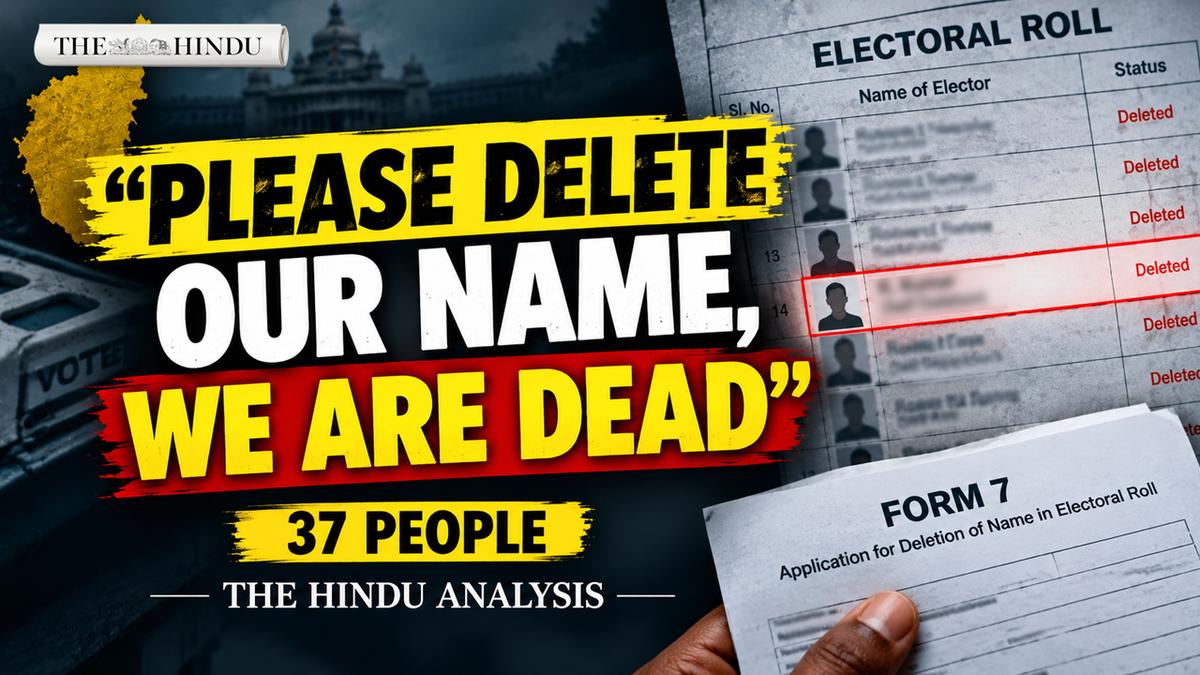
At least 37 individuals in Karnataka have filed forms to delete their own names from electoral rolls by falsely declaring themselves dead. This administrative anomaly highlights potential vulnerabilities or systemic errors in the voter registration process.
The Karnataka Electoral Roll Anomaly
In a bizarre administrative development, at least 37 individuals in Karnataka have submitted formal requests to remove their own names from the state’s electoral rolls, citing their own death as the primary reason for deletion. This unusual pattern was identified through an analysis of official records, which revealed that the individuals filing the objections were identical to the persons listed for removal, down to the exact initials and legal identity.
Potential Causes and Administrative Oversight
The phenomenon of living citizens filing for their own removal under the guise of being 'dead' raises significant questions regarding the integrity of the Election Commission’s Form 7, which is typically used to report the death of a voter. It is unclear whether these filings were the result of a coordinated protest, a widespread clerical misunderstanding, or a sophisticated attempt to highlight flaws in the verification process. The fact that these applications were processed or at least filed indicates a possible breakdown in the preliminary screening of death-related deletions.
Implications for Electoral Integrity
Electoral rolls serve as the backbone of democratic participation. When systems meant to prune the list of deceased voters are manipulated—or used erroneously by citizens—it risks compromising the accuracy of the voter database. If 37 people can successfully file as 'dead' without immediate flagging, it suggests that the verification mechanisms intended to cross-reference death certificates or civil registry data with the electoral roll may be insufficient or under-resourced in these specific instances.
Historical Context of Voter Roll Maintenance
Historically, the Election Commission of India has struggled with 'ghost voters'—names that remain on the rolls long after a person has passed away. Efforts to clean these lists are constant, but they rely heavily on accurate reporting from family members or local officials. This recent event presents a paradoxical reversal of that trend, where the living are actively seeking to be marked as deceased, effectively undermining the state's efforts to maintain an updated and accurate census of the electorate.
Future Trends and Necessary Reforms
Moving forward, the Election Commission will likely need to implement stricter scrutiny for Form 7 submissions. This incident should serve as a catalyst for integrating digital civil registration systems directly with electoral databases, ensuring that a death claim can be instantly verified against government-issued death certificates before any name is struck from the register. Without such integration, administrative databases remain prone to both human error and potential misuse.
Conclusion
The incident in Karnataka is a stark reminder of the complexities involved in managing massive electoral databases. While the motives behind these 37 filings remain under investigation, the event highlights a critical need for technological upgrades and robust verification protocols. Protecting the sanctity of the electoral process requires that every name on the list represents a living, eligible citizen, and every deletion is backed by irrefutable evidence.
Verification Required?