‘Disgrace at so many levels’: Tharoor on removal of Raihan Vadra’s exhibition photos
Source Entity
ABHISHEK MISHRA
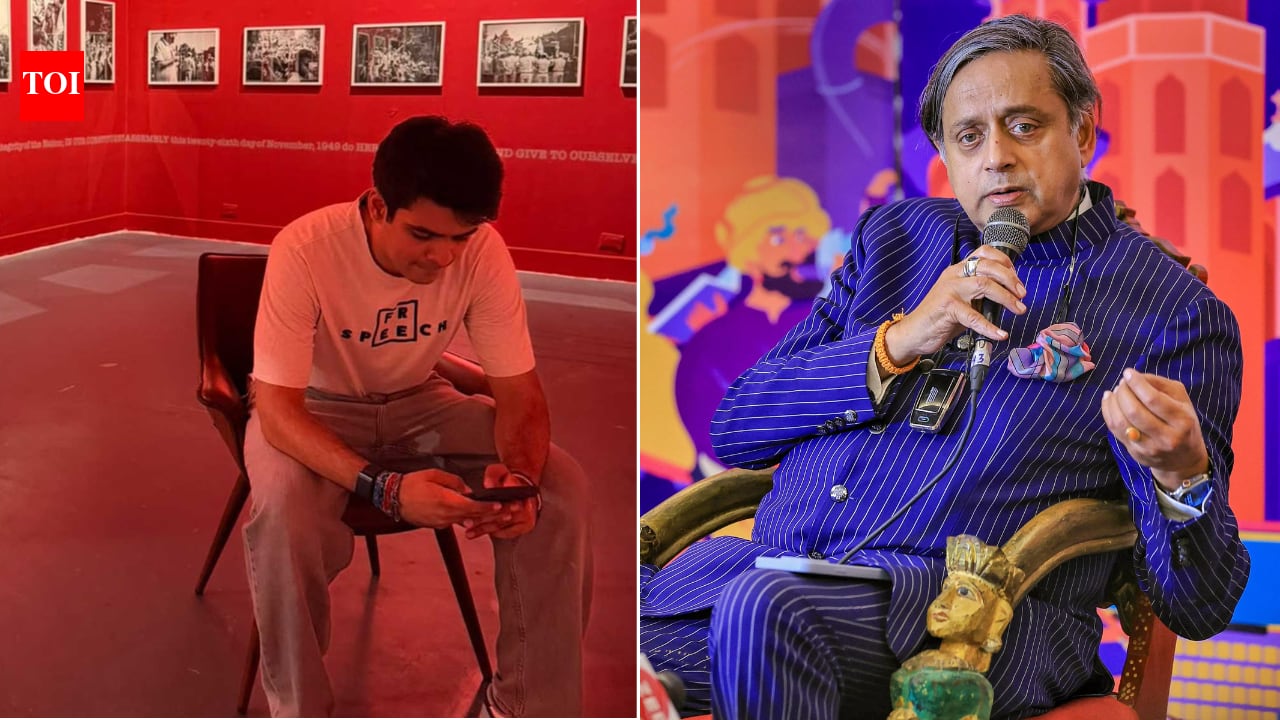
Raihan Vadra’s photo exhibition at Delhi’s Bikaner House faced censorship after officials removed 70 prints documenting protests. Following the controversy, the Kerala government has offered to host the exhibition, citing a commitment to artistic freedom.
The Censorship Controversy at Bikaner House
The recent controversy surrounding Raihan Vadra’s photography exhibition, titled "No Idea is Final," at Delhi’s Bikaner House has ignited a significant debate regarding the intersection of artistic expression and institutional control. Vadra, a visual artist and the son of Congress leader Priyanka Gandhi Vadra, found himself at the center of a public dispute when venue administrators demanded the removal of 70 out of 105 prints just hours before the opening. These images primarily documented recent protests in the national capital, including demonstrations at Jantar Mantar.
The Nature of the Disputed Content
The photographs in question were flagged by the venue as "political content." Notably, the collection included images of the national tricolour being waved at rallies. Vadra refused to voluntarily remove these specific images, asserting their artistic and documentary value. However, the venue organizers proceeded to take them down unilaterally. This act of censorship has drawn sharp criticism from political figures, most notably Shashi Tharoor, who termed the incident a "disgrace at so many levels."
Historical Context and Venue Precedent
Bikaner House has historically served as a venue for Vadra’s work, having hosted his exhibitions annually since 2021. This longstanding relationship makes the sudden, last-minute intervention particularly striking. By demanding the removal of works documenting public dissent, the administration has raised questions about the changing climate for cultural spaces in the capital and the degree to which institutions feel pressured to sanitize exhibitions that touch upon sensitive political landscapes.
Implications for Artistic Freedom
The removal of the prints serves as a case study for the challenges faced by contemporary artists who use documentary photography to capture civil unrest. When an institution labels images of the national flag or peaceful protests as "political" in a way that necessitates their removal, it signals a restrictive environment for visual storytelling. The incident highlights a growing tension between administrative oversight in government-affiliated venues and the creative autonomy of artists exploring the realities of the Indian protest culture.
The Kerala Government’s Intervention
In a swift turn of events, the state of Kerala has stepped in to offer a platform for the exhibition. Leader of the Opposition in the Kerala Legislative Assembly, VD Satheesan, stated that the state would be "happy and proud" to host the full collection. This move not only underscores the political divide regarding the treatment of Vadra’s work but also positions the state as a champion of artistic liberty, contrasting sharply with the restrictive experience in Delhi.
Conclusion: A Broader Trend
The "No Idea is Final" row is symptomatic of a larger trend where cultural spaces are increasingly becoming battlegrounds for political narratives. By offering to host the exhibition in its entirety, Kerala is challenging the precedent set by Bikaner House. The outcome of this situation will likely influence how artists approach public institutions in the future, potentially leading to more cautious self-censorship or, conversely, a more robust defense of artistic integrity in the face of administrative pressure.
Multiple Citing Sources