Nepal flood: Keralam starts help desk to provide emergency assisstance to stranded people
Source Entity
India Latest News: Top National Headlines Today & Breaking News | The Hindu
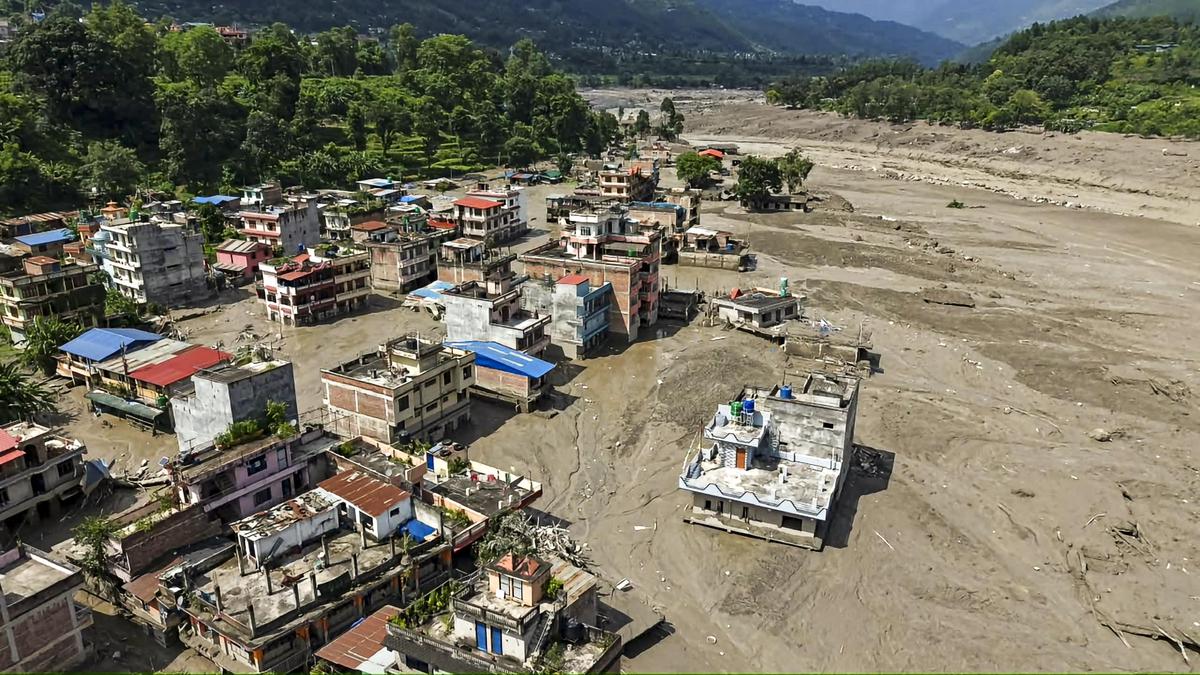
A massive ice-rock avalanche in the Himalayas has triggered devastating flash floods on the Nepal-Tibet border, resulting in significant loss of life and missing persons. Indian authorities in Uttar Pradesh and Bihar are on high alert as the surge of water flows downstream, while unrelated communal tensions rise in Rae Bareli following the vandalism of an Ambedkar statue.
Himalayan Catastrophe: The Nepal-Tibet Flash Flood
Recent reports confirm a catastrophic flash flood and mudslide impacting the Nepal-Tibet border, specifically affecting the Rasuwa district. Scientists from the International Centre for Integrated Mountain Development (ICIMOD) are currently investigating the hypothesis that a high-altitude ice-rock avalanche served as the primary trigger for this disaster. This event sent a lethal torrent of water, sediment, and massive boulders surging through the Bhote Koshi and Trishuli river systems, causing widespread destruction to downstream infrastructure.
Scientific Investigation and Regional Impact
The involvement of ICIMOD, an intergovernmental institution dedicated to protecting the Hindu Kush Himalaya (HKH) region, underscores the severity of the event. As climate patterns shift, high-altitude regions are becoming increasingly susceptible to such cryospheric hazards. The sudden nature of this flood left little time for evacuation, resulting in dozens of fatalities and leaving nearly 400 tourists—including 105 Indian nationals—missing. Search and rescue operations remain active, utilizing heavy machinery to clear debris from submerged residential areas along the Trishuli River.
Cross-Border Hydrological Risks
The environmental consequences of this disaster extend far beyond the immediate site of the avalanche. Indian authorities in Uttar Pradesh, Bihar, and Uttarakhand have been placed on high alert. Because the Trishuli River feeds into the Gandak system, there is a critical risk of rising water levels in the Ghaghara, Rapti, and Kosi rivers. The combination of the flood surge and the potential release of water from barrage gates in Nepal creates a compounding threat to low-lying areas, necessitating proactive disaster management protocols.
Historical and Social Context of Regional Instability
While the region grapples with this natural disaster, social stability remains a secondary concern. In an unrelated but significant incident, Baburiha village in Rae Bareli, India, experienced heightened tensions after the statue of Dr. B.R. Ambedkar was vandalized with mud and soot. This act of desecration has sparked local outrage, reflecting the sensitivity of social and cultural symbols in the region. Law enforcement, including the ASP and local Circle Officers, have been deployed to maintain order and conduct investigations.
Broader Implications and Future Trends
The concurrent nature of these events—a major environmental disaster and localized social unrest—highlights the complex challenges facing the South Asian region. The flood event serves as a grim reminder of the vulnerability of the HKH ecosystem, where glacial instability poses an existential threat to downstream populations. Moving forward, regional cooperation on early warning systems and infrastructure resilience will be vital to mitigating the impact of future cryospheric disasters. Similarly, the incident in Rae Bareli underscores the ongoing need for social cohesion and swift administrative intervention to prevent the escalation of communal tensions during times of national distress.
Multiple Citing Sources
Verification Required?