Rajasthan records 57% turnout in panchayat polls amid isolated boycotts
Source Entity
Parul Kulshrestha
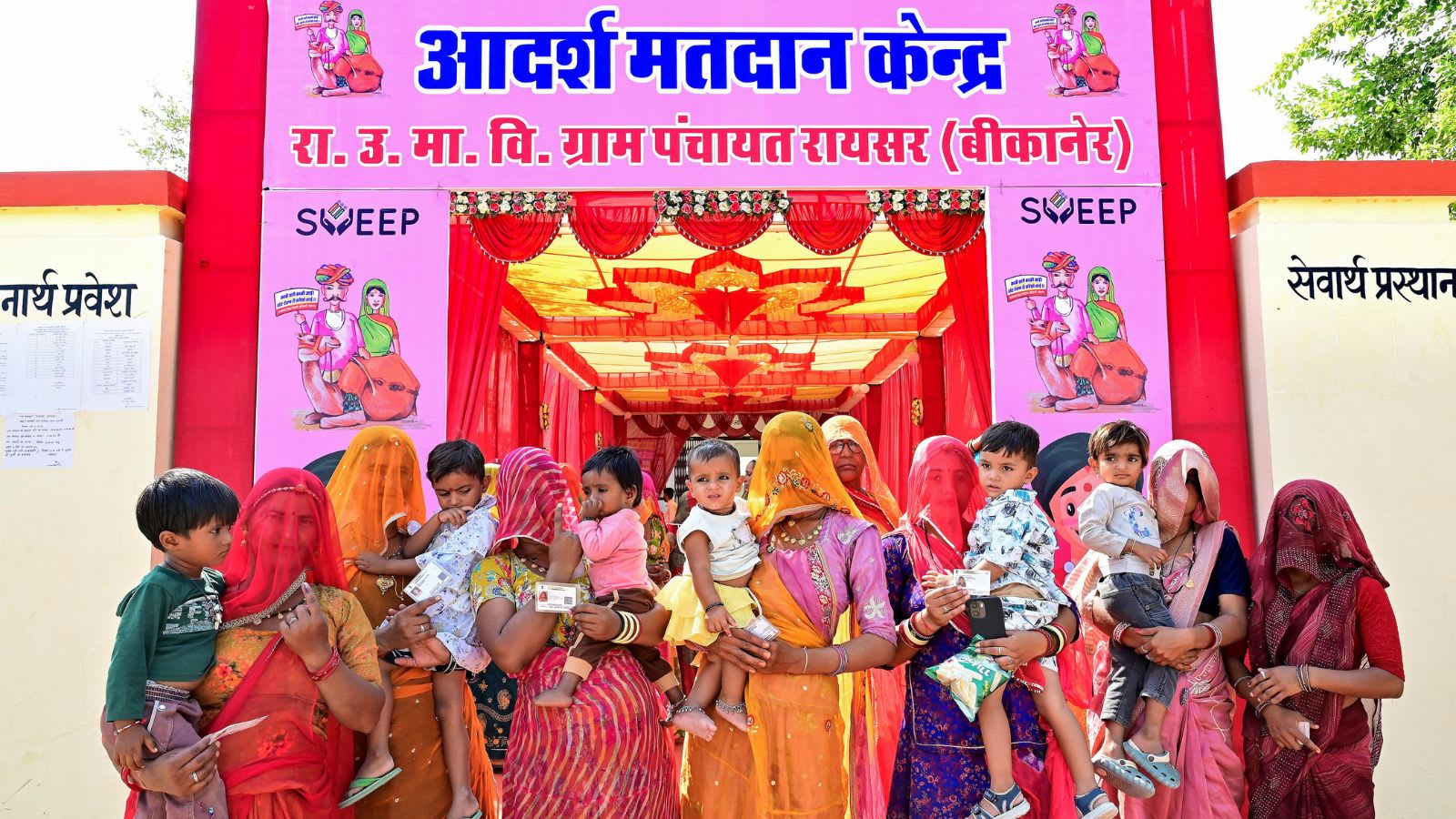
Rajasthan's first phase of Panchayati Raj elections saw a 56.74% voter turnout across 16 districts. Despite isolated boycotts over delimitation and reservation issues, over 85 lakh voters were eligible to choose from nearly 7,000 candidates.
Rajasthan Panchayati Raj Elections: A Snapshot of Grassroots Democracy
The first phase of the Panchayati Raj elections in Rajasthan witnessed a significant display of democratic engagement, with a voter turnout reaching 56.74% by 6 p.m. on Thursday. This electoral exercise, covering 16 districts, marks a critical step in the state's administrative process, as voters cast their ballots to elect representatives for 16 zila parishads and 104 panchayat samitis. With over 85.07 lakh eligible voters, the sheer scale of the operation underscores the importance of local governance in the state’s political framework.
Regional Variations in Voter Participation
Participation levels were notably diverse across the state's geography. The Naai Panchayat Samiti in Udaipur and the Mangta Panchayat Samiti in Barmer emerged as leaders in civic engagement, both recording an impressive 79% turnout. Conversely, the Rani station Panchayat Samiti in Pali district saw the lowest participation at 40%. Such disparities often reflect localized political dynamics, varying levels of campaign intensity, and the specific socio-economic conditions prevalent in individual rural constituencies.
Early Trends and District Performance
Data from the early hours of polling provided an interesting look at voter momentum. By 10 a.m., the overall turnout stood at 11.74%, with Jaipur district leading the charge at 14.70%. Other districts, including Ajmer (13.63%), Alwar (13.55%), and Kota (13.39%), also showed robust early-morning engagement. These metrics are vital for tracking the pulse of the electorate and understanding which regions are prioritizing local representation in this multi-phase election cycle.
Challenges: Reservation and Delimitation
Despite the overall orderly conduct of the polls, the process was not without friction. Reports confirmed that isolated incidents of boycotts occurred, primarily driven by long-standing concerns regarding reservation policies and delimitation processes. These issues are perennial points of contention in rural Indian elections, as changes to ward boundaries or reservation quotas directly impact the political aspirations of local leaders and the representation of specific communities.
Scope and Future Implications
The first phase involved a competitive field of 6,976 candidates vying for 2,081 seats, including 293 zila parishad wards and 1,788 panchayat samiti wards. As these elections are scheduled to be held in three phases—covering a total of 41 zila parishads, 457 panchayat samitis, and 14,403 gram panchayats—the outcomes will have a cascading effect on local development initiatives. The results of these rural polls will ultimately dictate the implementation of government schemes and infrastructure projects at the village level for the coming term.
Conclusion
The Rajasthan Panchayati Raj elections represent a foundational pillar of the state's political structure. While challenges related to delimitation and reservation continue to test the system, the high turnout in several regions demonstrates the public's continued investment in the panchayati system. As the remaining phases progress, the focus will remain on how these local bodies address the diverse needs of Rajasthan’s rural population and navigate the complex political landscape of the state.
Multiple Citing Sources