After nearly 100 years, tiger spotted in Pune’s Beed district
Source Entity
Shubham Kurale
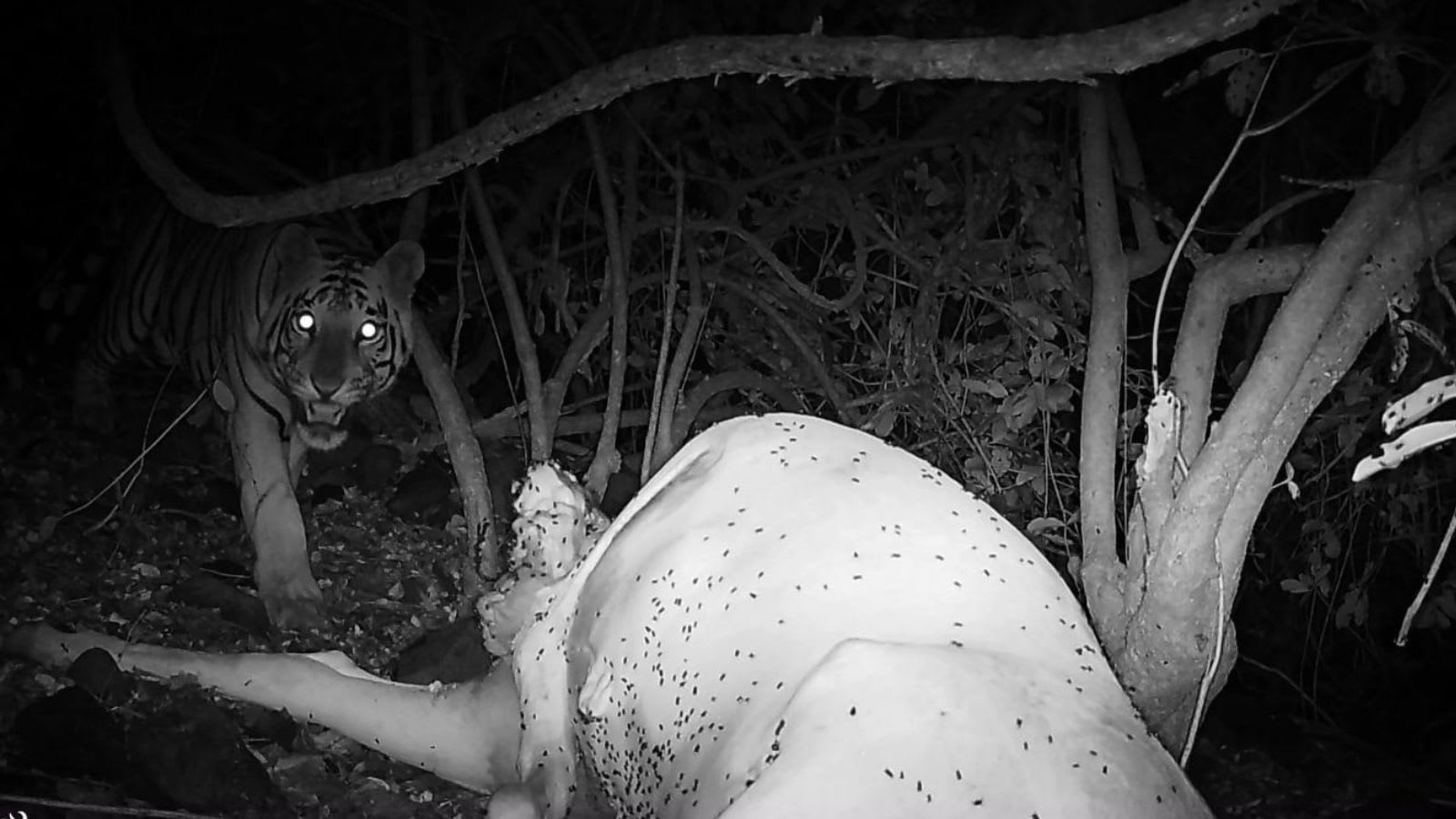
A four-year-old male tiger has been spotted in Maharashtra's Beed district, marking the first confirmed sighting in the region in nearly a century. The tiger traveled from the Tipeshwar Wildlife Sanctuary in Yavatmal, highlighting significant shifts in wildlife corridors.
A Historic Return: Tiger Spotted in Beed After a Century
In a landmark conservation event, a four-year-old male tiger weighing over 200 kg has been documented in the Beed district of Maharashtra. This sighting, captured via camera trap in the Brahmgaon forest range of Ashti tehsil on August 20, represents the first confirmed presence of the apex predator in the region in nearly 100 years. According to local forest officials, the last official records of tigers in this district date back to the 1910s and 1920s, as referenced in the Beed District Gazetteer of 1920.
The Long Journey from Tipeshwar
This significant movement is not an isolated occurrence but the culmination of a long trek. Officials have confirmed that the tiger originated from the Tipeshwar Wildlife Sanctuary in Yavatmal. The animal’s successful traversal across multiple districts demonstrates the existence of functional, albeit fragmented, biological corridors that allow wildlife to move between protected areas. This migration is a testament to the tiger's resilience and its instinctive drive to seek new territories for hunting and mating.
Ecological Implications of Range Expansion
The reappearance of a tiger in a landscape that has been devoid of the species for a century carries profound ecological implications. As an apex predator, the tiger plays a crucial role in maintaining the health of the ecosystem by regulating prey populations. Its arrival in the Ashti and Patoda forest areas suggests that these regions may possess the necessary prey base and habitat connectivity to support large carnivores, even if only temporarily or as a transit point.
Challenges of Human-Wildlife Coexistence
While the sighting is a cause for celebration among conservationists, it also presents immediate administrative and safety challenges. The movement of a large, 200 kg male tiger through human-dominated landscapes necessitates heightened vigilance from local forest departments. Ashti Range Forest Officer Amol Munde and his team are tasked with monitoring the tiger's movements to ensure the safety of both the animal and the local human population, preventing potential man-animal conflict.
Future Trends in Conservation
This event serves as a wake-up call for state-level wildlife management. As tiger populations grow within established sanctuaries like Tipeshwar, young males are increasingly forced to disperse to find their own territories. This trend indicates that conservation strategies must evolve to focus on 'landscape-level' management rather than limiting protection strictly to designated parks. Protecting these transit corridors is essential for the long-term genetic health and survival of the species.
Conclusion
In summary, the return of the tiger to Beed is a historic milestone that highlights both the success of tiger conservation in Maharashtra and the ongoing need for adaptive wildlife management. The documentation of this journey provides invaluable data for researchers studying dispersal patterns. Moving forward, the focus must remain on community sensitization and the preservation of the corridors that allow these magnificent creatures to roam freely across their ancestral ranges.