Will US strike Iran again? Donald Trump sends mixed signals: 'Can avoid if…'
Source Entity
Latest News: Todays Latest News Headlines from India & World | Hindustan Times | Hindustan Times
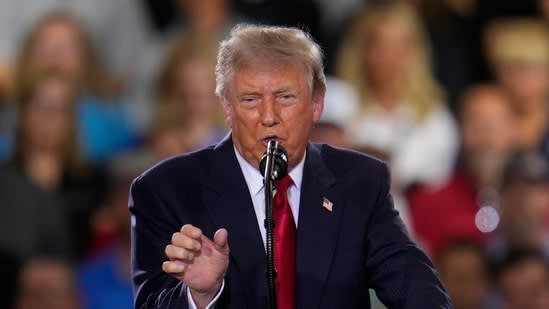
President Donald Trump has expressed a preference for diplomatic resolution over military conflict with Iran, despite maintaining threats of force. While asserting the U.S. is negotiating from a position of strength, he remains open to avoiding further escalation.
The Delicate Balance of US-Iran Diplomacy
President Donald Trump’s recent remarks regarding potential military engagement with Iran signal a complex, dual-track approach to foreign policy. By explicitly stating that he wishes to avoid further military escalation while simultaneously maintaining the threat of force, the administration is attempting to leverage a 'position of strength' to compel Iran toward a negotiated settlement. This strategy, often described as 'coercive diplomacy,' relies on the credibility of the threat to incentivize the adversary to return to the negotiating table.
The Strategic Role of Deterrence
The President’s specific mention of targeting Iran’s infrastructure, such as bridges, serves as a calculated psychological component of this strategy. By identifying high-value targets, the administration aims to increase the perceived cost of continued hostility for the Iranian leadership. This tactic is intended to demonstrate that the U.S. has both the capability and the political will to inflict significant damage, thereby creating a deterrent effect intended to prevent further direct conflict following the recent pause in hostilities.
Shifting from Conflict to Negotiation
Following a period of direct exchange, the current pause in military activity provides a critical window for diplomatic maneuvers. Trump’s stated desire to avoid force underscores a pragmatic recognition that sustained open conflict would carry significant regional and global risks, including economic instability and the potential for a broader Middle Eastern conflagration. The shift in tone toward negotiation suggests that the administration is testing the waters to see if the recent military posturing has sufficiently softened Iran’s stance.
The Challenge of Mixed Signals
Critics argue that the juxtaposition of diplomatic overtures and threats of destruction creates ambiguity in international relations. While this may keep an adversary off-balance, it also risks miscalculation. The effectiveness of this approach hinges entirely on whether the Iranian leadership perceives these signals as a genuine invitation to discuss terms or as a precursor to inevitable aggression, which could inadvertently trigger a cycle of preemptive responses.
Future Implications and Trends
Looking forward, the success of this policy will likely be measured by the ability of both nations to establish a formal communication channel or a framework for de-escalation. If the current 'position of strength' fails to yield a diplomatic breakthrough, the administration faces the difficult choice of either following through on its threats or appearing to weaken its deterrence posture. The coming weeks will be pivotal in determining whether this high-stakes standoff evolves into a stable diplomatic process or reverts to active military engagement.
Verification Required?