Trump’s 2-front challenge: Shades of 1914 as Zelenskyy, Netanyahu converge on Washington
Source Entity
CHIDANAND RAJGHATTA
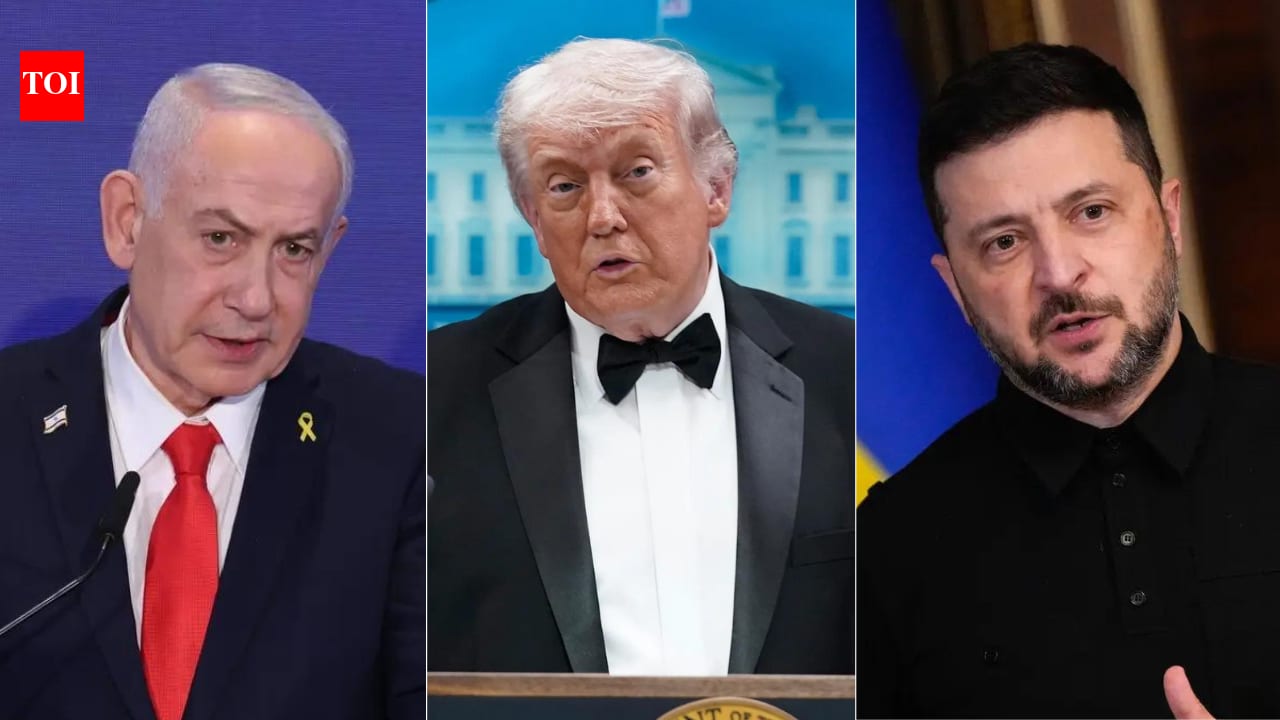
President Trump is holding critical meetings with Benjamin Netanyahu and Volodymyr Zelenskyy in Washington as conflicts in the Middle East and Ukraine increasingly converge. Netanyahu is reportedly presenting a secret 'Pickaxe' dossier on Iranian nuclear activity, while the U.S. balances diplomatic efforts against the threat of military escalation.
The Geopolitical Convergence: A Washington Summit
The arrival of Israeli Prime Minister Benjamin Netanyahu and Ukrainian President Volodymyr Zelenskyy in Washington marks a precarious moment for U.S. foreign policy. As these leaders converge on the White House, the distinct theaters of war in the Middle East and Eastern Europe are beginning to overlap, forcing the administration of President Donald Trump to manage what many are calling a two-front challenge reminiscent of historical geopolitical shifts.
The 'Pickaxe' Dossier and the Iranian Nuclear Question
Central to the discussions with Prime Minister Netanyahu is the emergence of intelligence regarding Iran’s 'Pickaxe Mountain' nuclear facility. Reports indicate that Netanyahu is prepared to present a top-secret dossier to President Trump, alleging that Tehran has resumed nuclear activities that threaten regional security. This dossier acts as a focal point for Israeli efforts to maintain pressure on Iran, even as Tehran remains defiant, insisting that it will never abandon its nuclear rights or submit to demands made under the threat of military force.
The Colliding Fronts: Ukraine and Iran
For years, the war in Ukraine and the conflict between Israel and Iran were viewed as separate geopolitical dramas. However, recent developments, including Ukrainian strikes on Iranian commercial interests, have signaled a dangerous blurring of these frontlines. The intersection of these conflicts is no longer merely theoretical; the global supply chains and military logistics supporting both the Russian invasion of Ukraine and Iran’s regional maneuvers are increasingly intertwined, creating a complex web of alliances that complicates U.S. diplomatic strategy.
Diplomatic Pauses and Military Realities
President Trump currently faces a delicate balancing act. While he has paused U.S. airstrikes against Iran to provide space for a potential diplomatic breakthrough, the region remains on the brink of significant escalation. Simultaneously, President Zelenskyy arrives in Washington seeking to maintain international momentum following recent deep-strike successes against Russian targets. The administration must now determine whether these conflicts can be managed through separate diplomatic tracks or if they require a unified, comprehensive strategic framework.
Historical Parallels and Future Implications
The convergence of these two intense conflicts in Washington has drawn comparisons to historical periods of instability, where regional disputes rapidly escalated into broader global crises. The presence of both leaders at the funeral of the late Senator Lindsey Graham—a figure who championed both the Ukrainian defense and a hawkish stance toward Iran—serves as a symbolic backdrop for the current policy dilemma. Whether this moment results in a containment strategy or a more kinetic, expansive military posture will define the trajectory of the remainder of the presidential term.
Conclusion: A Defining Moment
The coming days will prove critical as the administration navigates the intelligence provided by the 'Pickaxe' dossier and the urgent requests from Kyiv. The challenge for the United States is to prevent these two theaters of war from merging into a single, uncontrollable global confrontation. As the administration weighs the necessity of military deterrence against the risks of wider war, the decisions made in these Washington meetings will likely set the tone for international security for the foreseeable future.
Multiple Citing Sources