Trump's warning despite ‘breakthrough’ hopes; Oman's crucial offer for Iran over Hormuz | Latest updates in US-Iran war
Source Entity
Latest News: Todays Latest News Headlines from India & World | Hindustan Times | Hindustan Times
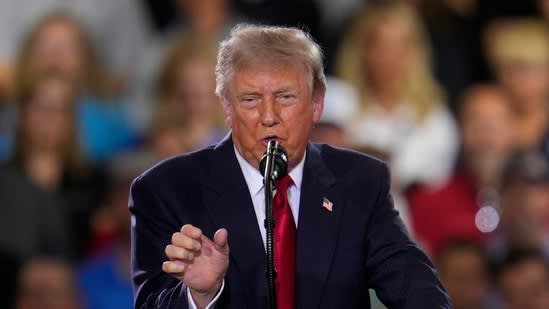
As the US-Iran conflict hits its five-month mark, diplomatic efforts are focusing on Oman's proposal to manage the Strait of Hormuz. While President Trump suggests a potential breakthrough, he maintains a firm warning of renewed military action if negotiations falter.
The Strait of Hormuz: A New Diplomatic Frontier
As the conflict between the United States and Iran enters its fifth month, the geopolitical landscape remains volatile. Despite multiple ceasefire attempts and ongoing international mediation, a definitive resolution remains elusive. The core of this impasse revolves around the strategic Strait of Hormuz, a critical maritime chokepoint that has become the focal point of both military tension and recent diplomatic maneuvering.
The Omani Mediation Strategy
Oman has emerged as a key intermediary, proposing a "Malacca-style" management plan for the Strait of Hormuz. This proposal, involving the potential implementation of transit fees for vessels, aims to provide a framework for safe navigation while addressing the security concerns of littoral states. Iranian Foreign Ministry spokesperson Esmaeil Baghaei has characterized these discussions as "constructive," emphasizing that these specific talks are independent of the broader friction with Washington, yet they clearly serve as a potential vehicle to break the current diplomatic deadlock.
Trump’s Dual-Track Approach
President Donald Trump has adopted a high-stakes, dual-track approach to the crisis. While acknowledging a "good chance" of a diplomatic breakthrough, he has simultaneously issued a stern warning to Tehran. Trump’s rhetoric underscores that the window for negotiation is limited; failure to reach a substantive agreement would likely trigger a return to the aggressive military posture previously demonstrated by US CENTCOM, which has already conducted consecutive nights of targeted operations.
Economic and Strategic Implications
The proposal to charge transit fees is highly significant given the global dependency on oil and gas shipments passing through the Strait. By involving Saudi Arabia and Oman in discussions with Iranian officials, the plan seeks to shift the burden of maritime security away from unilateral military dominance and toward a cooperative regional management model. This transition is essential for stabilizing global energy markets that have been significantly disrupted by the last five months of hostilities.
Challenges to Implementation
Despite the optimism surrounding the Omani proposal, the path to implementation is fraught with complexity. The "mixed signals" emanating from Tehran and Muscat suggest that internal political factions remain divided on the merits of relinquishing or sharing control over the Strait. Furthermore, the decoupling of the Hormuz issue from the broader nuclear and regional security talks remains a delicate balancing act that could easily be upended by further skirmishes or miscalculations.
Future Outlook and Conclusion
Looking forward, the success of the Omani-led initiative will likely determine whether the region descends into a prolonged period of kinetic warfare or moves toward a fragile, negotiated stability. If the proposed fee structure can satisfy Iranian sovereignty concerns while ensuring the free flow of international commerce, it may serve as the necessary catalyst to revive wider peace talks. However, as the five-month milestone passes, the shadow of renewed American military intervention remains the primary deterrent against total diplomatic failure.
Multiple Citing Sources
Verification Required?